
Bypass Shocks Explained: When Should You Consider External Bypass Shocks?
When it comes to high performance off road suspension, bypass shocks are a popular choice for both recreational builds and professional race trucks. FOX and King are two of the most common names you will see when it comes to high performance bypass shocks, with legendary drivers and teams including Luke McMillin, Christopher Polvoorde, Bryce Menzies, Alan Ampudia, Harley Letner, and many more relying on this technology in desert racing.
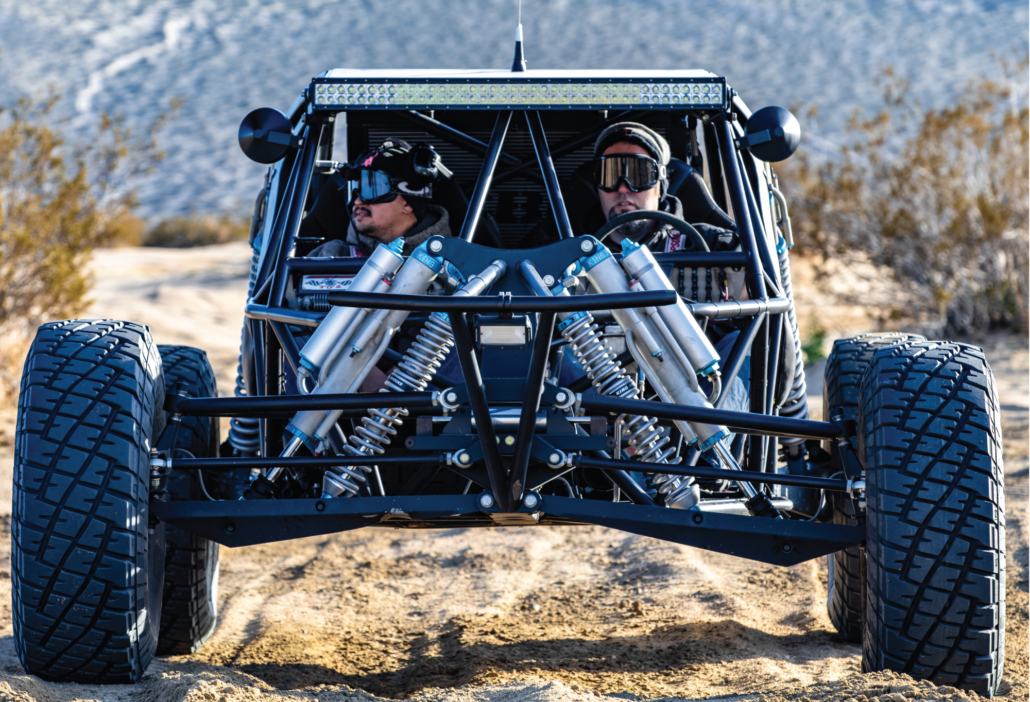
You will most commonly see bypass shocks on prerunners and race trucks that are specifically designed for high speed off road driving. This is where bypass shocks really shine. Their position sensitive damping allows the shock to provide different levels of control throughout the suspension’s travel, helping the vehicle stay composed through whoops, G outs, jumps, and rough terrain.
But while seeing massive bypass shocks on a million dollar trophy truck looks impressive, that does not necessarily mean they are the right choice for every build. Bypass shocks can offer incredible performance, but they also come with additional cost, complexity, and tuning requirements.
So when should you actually consider bypass shocks? Let’s take a closer look at where they make sense and what you should consider before making the investment.
What are bypass shocks?
Bypass shocks are high performance off road shocks designed to provide position sensitive damping and greater control throughout the suspension’s travel. Unlike traditional shocks, bypass shocks use external tubes to route oil around the main piston, creating different damping zones that can be tuned to provide softer damping in one part of the suspension’s travel and increased damping in another. This allows the shock to deliver a more controlled and comfortable ride while providing additional support when the suspension approaches full compression or extension. Proper tube placement, shock sizing, suspension travel, and custom tuning are critical to getting the most from a bypass shock, making them a highly tunable option for demanding off road applications.
Bypass Shock Options
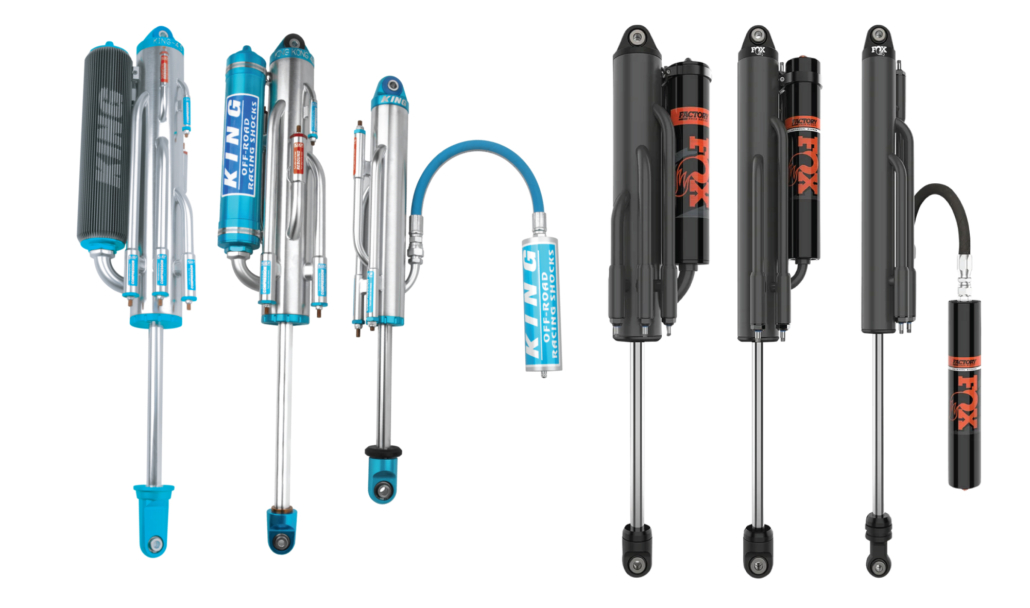
Bypass shocks are available in a wide range of sizes and configurations, allowing them to be tailored to different vehicles, suspension designs, and performance requirements. Depending on the application, bypass shocks can use different numbers, sizes, and configurations of external bypass tubes. They can also be built with either a piggyback reservoir mounted directly to the shock body or a remote reservoir connected to the shock with a hose. The reservoir style is largely determined by available space and the requirements of the suspension system.
Shock body diameters can range from 2.0 inches all the way up to 4.5 inches, with common sizes including 2.0, 2.5, 3.0, 4.0, 4.4, and 4.5 inch bodies. Larger diameter shocks generally provide greater oil volume and heat capacity, which can be beneficial for vehicles that see extended high speed off road use. Shock travel also varies depending on the application, with bypass shocks commonly offering approximately 8 to 16 inches of travel. Choosing the correct body size and travel length is important because the shock needs to match the available suspension travel and the overall requirements of the vehicle.
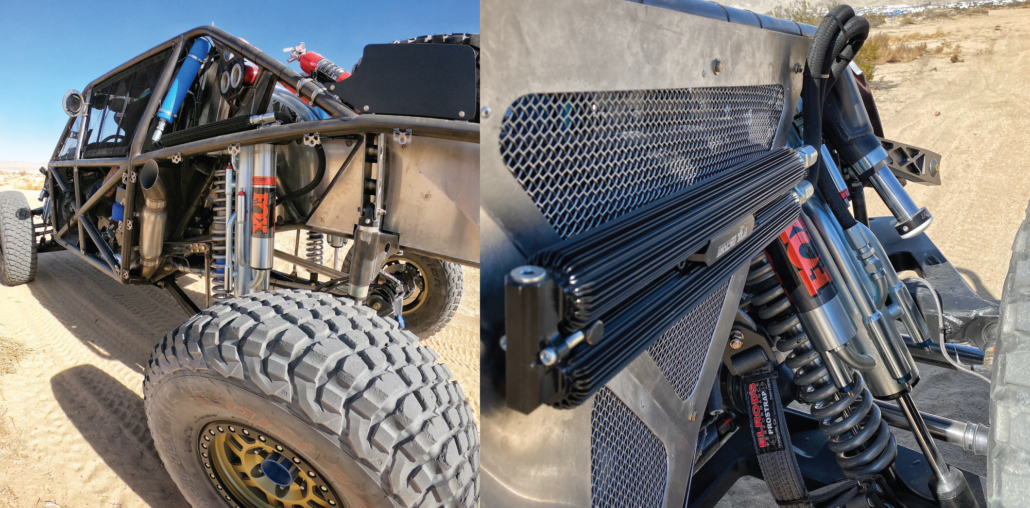
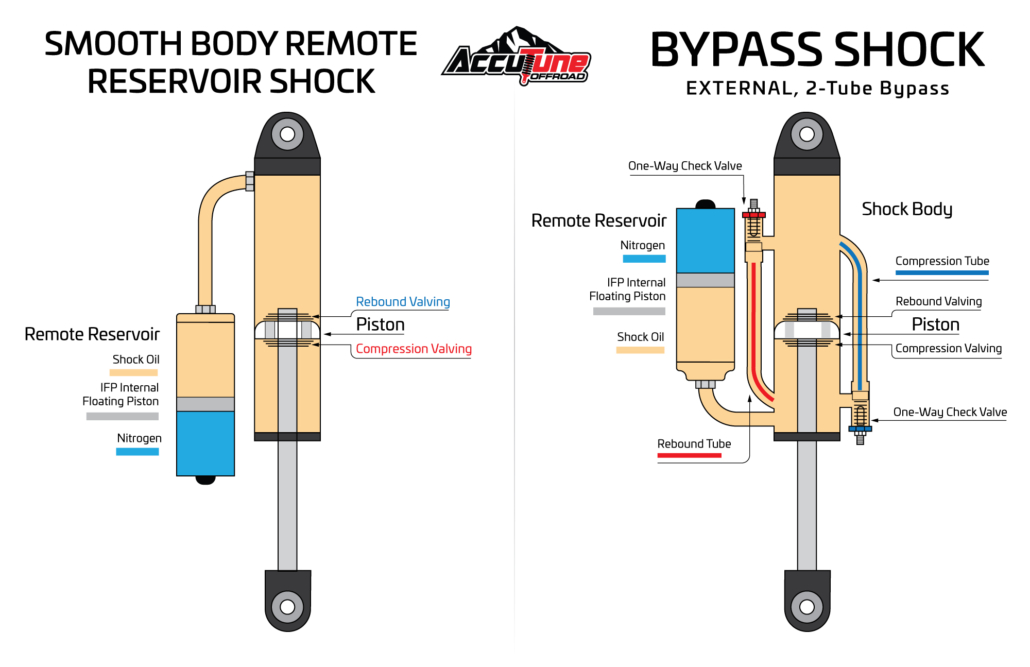
One of the defining features of a bypass shock is the external bypass tubes. These tubes allow oil to flow around the main piston under specific conditions, creating different damping zones throughout the shock’s travel. Some bypass tubes control compression while others control rebound, and the number of tubes used can vary depending on how much control and adjustability is desired.
The location of each bypass tube on the shock body is also extremely important. Because the shock piston moves through the body as the suspension cycles, placing a bypass tube at a different height changes when that tube becomes active. This allows the shock to have different damping characteristics at different points in its travel. For example, a shock can be designed to provide relatively soft damping around ride height for a more compliant ride, then progressively increase damping as the suspension moves deeper into compression. Rebound tubes can be positioned to control how quickly the suspension extends after a compression event.
This position sensitive damping is what makes bypass shocks different from conventional smooth body shocks. Rather than relying primarily on a single valving setup throughout the shock’s entire range of motion, a properly configured bypass shock can provide different levels of damping depending on where the piston is within the shock body. The number, size, and location of the bypass tubes, along with the internal valving and shock dimensions, all work together to determine how the shock behaves throughout its travel.
Because there are so many variables involved, bypass shocks require careful selection and tuning. Simply choosing the largest shock or adding more bypass tubes does not automatically result in better performance. The shock needs to be matched to the vehicle’s weight, suspension geometry, available travel, intended use, and desired ride characteristics. When properly designed and tuned, a bypass shock can provide a highly controlled suspension response across a wide range of terrain and suspension movement.

How do bypass shocks work?
Bypass shocks work by directing shock oil through external bypass tubes that route oil around the main piston. Each tube uses a one way check valve to control how much oil can flow through the tube, allowing the shock to provide different levels of damping throughout its range of travel. The position of each tube on the shock body creates specific damping zones, which can provide softer damping around ride height and increased damping as the suspension approaches full compression or extension. The size of the bypass tubes and the adjustment of the check valves determine how much oil can flow through each zone. This position sensitive design gives bypass shocks a high level of control and tunability for demanding off road applications. Learn even more about Bypass Shocks in a previous article here.
How different are Bypass shocks from non-bypass shocks?
Bypass shocks are significantly different from traditional smooth body shocks in their design, fitment, and cost. A conventional shock uses internal valving to control oil flow and determine how the shock responds throughout its travel. An external bypass shock adds another level of control by using external bypass tubes to create different damping zones throughout the shock’s stroke. This makes bypass shocks highly tunable, but also more complex to design and set up properly.
Fitment is another major consideration. A regular shock can often be selected based primarily on compressed and extended length, mounting configuration, and the vehicle’s application. Bypass shocks require much more attention to detail. The shock diameter, stroke length, tube configuration, tube location, reservoir style, and available suspension travel all need to work together. The location of the bypass tubes is especially important because it determines where each damping zone becomes active as the shock cycles. Bypass shocks also require enough suspension travel to allow those zones to function properly.
The added complexity also comes with a higher price. Bypass shocks are generally more expensive than conventional smooth body shocks because they use larger shock bodies, additional components, external bypass tubes, and more involved tuning. Installation can also require more planning because the larger shock body and external tubes need adequate clearance throughout the suspension’s entire range of motion.
That additional cost and complexity can be worthwhile for a vehicle that regularly sees high speed off road driving, where the ability to control different portions of the suspension’s travel provides a significant performance advantage. However, if the vehicle is primarily street driven or used for moderate trails, a properly tuned smooth body shock can often provide excellent performance without the added expense and complexity of a bypass setup.
Ultimately, bypass shocks are not simply a more expensive version of a regular shock. They are a different suspension tool designed around position sensitive damping and extensive tuning capability. The key is determining whether your vehicle’s suspension travel, intended use, and performance goals justify the additional cost and complexity.

How do you tune bypass shocks?
Tuning bypass shocks is considerably more involved than tuning a traditional smooth body shock because the shock can be adjusted through both its internal valving and external bypass system. The goal is to control how much damping the shock provides at different points throughout its travel and at different shaft speeds.
The external bypass tubes are a major part of the tuning process. Each tube controls oil flow through a specific portion of the shock’s travel, and the location of the tube determines when that damping zone becomes active. By changing the tube height, diameter, and configuration, the shock can be designed with softer or firmer damping zones. The bypass adjusters can then be used to control how much oil is allowed to flow through each tube. More oil flow generally results in softer damping, while restricting flow increases damping.
The internal valving also plays an important role. In a typical bypass setup, the external tubes control specific portions of the shock’s travel while the internal piston valving provides damping when the piston moves beyond those bypass zones. For example, near full compression, the compression bypass tubes may no longer be active, leaving the internal valving to provide additional damping and help control bottoming. The same principle applies to rebound near full extension to help control top out.
Proper bypass tuning starts with the vehicle itself. Total weight, weight distribution, suspension geometry, available up travel, shock stroke, motion ratios, and intended use all need to be considered before determining the appropriate shock configuration and valving. The bypass tubes then need to be positioned correctly within the shock’s travel so the different damping zones occur where they are actually needed.
This is what makes bypass shocks so powerful, but also more difficult to tune than a conventional shock. A poorly configured bypass shock can feel too stiff, too soft, or inconsistent because the damping zones are not working together properly. When the shock body size, bypass configuration, internal valving, and external adjustments are properly matched to the vehicle, bypass shocks can provide exceptional control throughout the suspension’s travel.

Are bypass shocks the right fit for you and your offroad vehicle?
Not every off road vehicle needs bypass shocks. They are best suited for vehicles that have enough suspension travel and are regularly driven hard enough to take advantage of position sensitive damping. The right application depends heavily on how the vehicle is built and how it is used.
A prerunner is one of the most obvious examples. A truck that is regularly driven at high speeds across desert terrain can benefit from bypass shocks because the suspension is constantly moving through a large portion of its travel. The bypass tubes allow the shock to provide different levels of damping as the suspension moves, giving the truck a softer response through smaller impacts while adding more control deeper into the travel. This is especially useful when dealing with whoops, G outs, large bumps, and repeated high speed impacts.
A dedicated desert race truck is another excellent application. These vehicles are specifically designed around suspension travel, high speed driving, and repeated hard impacts. Larger bypass shocks can provide the damping control and oil capacity needed for this type of use. FOX and King offer external bypass shocks specifically designed for racing, with configurations that can be customized around the vehicle’s suspension and intended use.
A long travel or mid travel truck that is frequently driven aggressively off road can also be a good candidate. For example, a heavily modified Tacoma, Tundra, Silverado, F150, or similar truck with increased suspension travel may benefit from bypass shocks if the owner regularly uses that additional travel at higher speeds. However, simply having a long travel kit does not automatically mean bypass shocks are necessary. The vehicle still needs to be built and used in a way that takes advantage of the additional tuning capability.
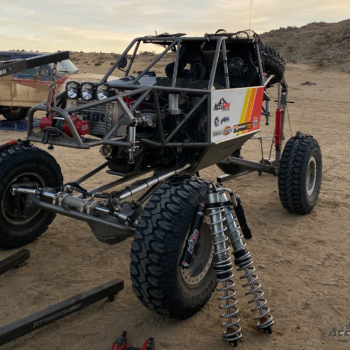
UTVs and other high performance off road vehicles can also make excellent candidates. These vehicles are often designed with significant suspension travel and are commonly driven at high speeds over rough terrain. Their suspension systems can take advantage of position sensitive damping because the shocks are working through a large amount of travel and seeing frequent high energy impacts.
On the other hand, there are plenty of vehicles where external bypass shocks may not make sense. A daily driven 4Runner that spends most of its time commuting and only occasionally visits a trail is one example. A properly tuned conventional reservoir shock can provide excellent ride quality and off road performance without the additional complexity and cost of a bypass setup. King specifically notes that shock selection should be based on driving style, vehicle configuration, and intended use, and offers bolt on OEM upgrade kits for stock and lifted trucks.
The same applies to a Tacoma or Tundra that is primarily used for commuting, camping, overlanding, and moderate trail driving. If the vehicle rarely sees high speed desert terrain or repeated large impacts, the additional tuning capability of an external bypass may provide little practical benefit. In these situations, a high quality reservoir shock or internal bypass shock can provide a better balance of performance, fitment, complexity, and cost.
Vehicles with limited suspension travel can also be poor candidates for external bypass shocks. Bypass shocks rely on the piston moving through different zones of the shock body, so there needs to be enough usable travel for those zones to be positioned and tuned effectively. Adding an expensive bypass shock to a suspension that cannot take advantage of its available travel does not automatically improve performance.
Ultimately, the question is not whether bypass shocks are better than regular shocks. It is whether your vehicle and driving style can actually take advantage of what a bypass shock offers. A high speed prerunner, desert race truck, or long travel vehicle that regularly sees aggressive off road use can make excellent use of an external bypass. A daily driven truck that sees occasional trails may be better served by a properly tuned conventional or reservoir shock without the additional cost and complexity.





Leave a Reply
Want to join the discussion?Feel free to contribute!