When you lift your Toyota Tacoma or 4Runner, a wheel alignment is almost always required to ensure proper handling and tire wear. In this article, we’ll take a closer look at the front suspension and steering systems on these vehicles and explain how an alignment works. Proper Tacoma alignment is critical after installing a lift kit to ensure accurate handling and long-lasting tire wear. Likewise, for lifted applications, a 4Runner alignment keeps steering precise and maximizes tire life.
Please note: This isn’t meant to be a step-by-step DIY alignment guide—instead, it’s an overview to help you better understand the process. For the best results, we always recommend having your alignment performed by a trained professional.
-
PART 1
- What is an alignment?
- Why you need an alignment
- What is Camber, Caster & Toe?
- How adjustments are made for an alignment
- Cam Tab Adjusters
- Why is a UCA needed when lifting your Tacoma?
- How much lift before UCA is needed?
- Ideal alignment setup for a lifted Tacoma
What is a Wheel Alignment?
A wheel alignment is the process of adjusting your vehicle’s front suspension and steering components so it tracks straight, handles properly, and ensures even tire wear. The goal is to fine-tune the angles of your tires—known as camber, caster, and toe—so they make the best possible contact with the road or trail.
Why Do You Need an Alignment?
It’s common to need an alignment anytime front suspension work is done, such as replacing control arms, steering joints, or shocks. Lifting your vehicle will almost always require one as well. Even if nothing’s been replaced, hard off-road use can loosen things up over time, making a re-alignment necessary to keep your rig driving safely and smoothly.
What is Camber, Caster, Toe?
Caster:
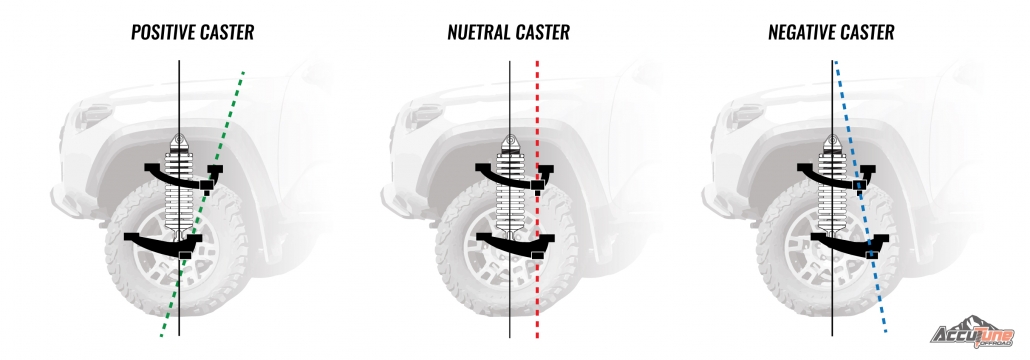
Caster refers to the angle of the steering axis when viewed from the side of the vehicle. In simpler terms, it’s the tilt of the suspension’s steering components relative to vertical (top to bottom). Positive caster means the upper pivot point leans toward the rear of the vehicle, while negative caster leans forward. This angle plays a big role in straight-line stability and steering feel—more positive caster generally improves high-speed stability and steering return to center, while too little can make the vehicle feel twitchy or wander.
Camber:
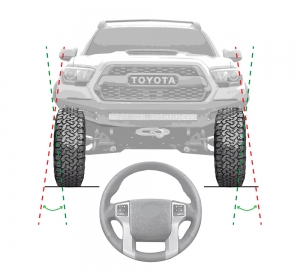
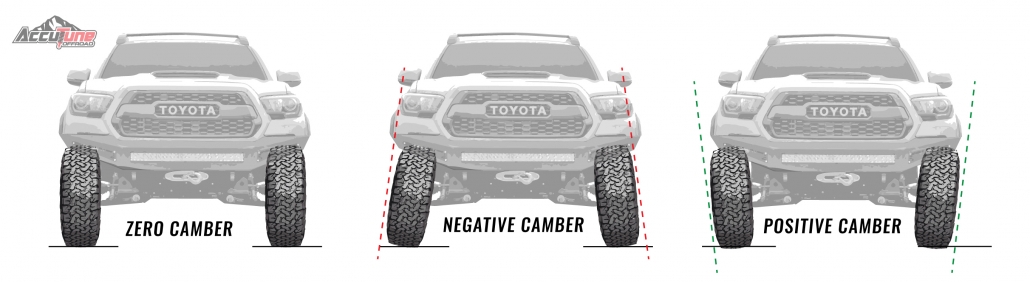
Camber is the inward or outward tilt of the tire and wheel when viewed from the front of the vehicle. If the top of the tire tilts outward, away from the vehicle, it’s considered positive camber. If the top of the tire tilts inward toward the vehicle, it’s negative camber. Camber directly affects tire contact with the road, cornering grip, and tire wear. A small amount of negative camber can improve handling and cornering stability by keeping the tire flatter on the ground during turns, while excessive positive or negative camber can cause uneven tire wear and poor straight-line tracking.
TOE:
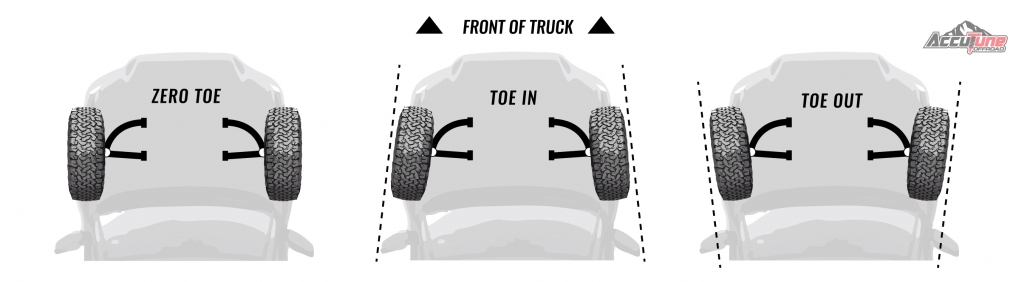
Toe refers to the direction the tires are pointed relative to each other when viewed from above. If the front of the tires angle inward toward each other, it’s called toe-in. If the front of the tires angle outward away from each other, it’s called toe-out. Toe adjustments have a big impact on straight-line stability, steering response, and tire wear. Too much toe-in can cause excessive tire wear on the outer edges, while too much toe-out can cause instability and wear on the inner edges. Proper toe alignment ensures your vehicle tracks straight and your tires last longer.
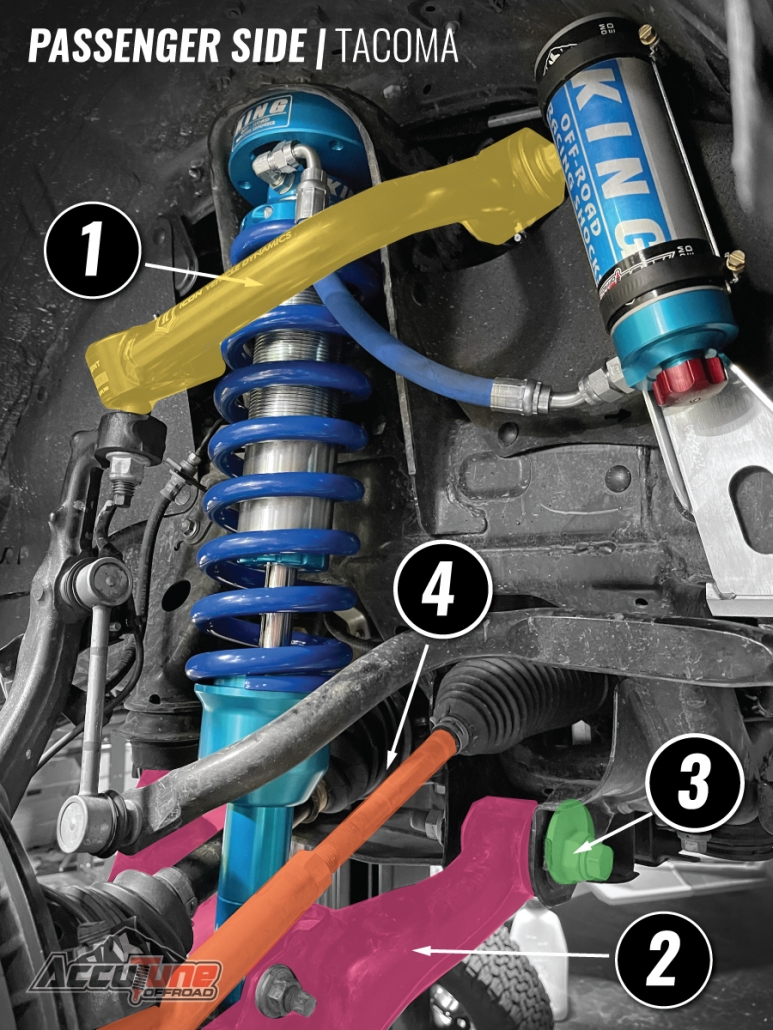
Components that will be adjusted during alignment
1. Upper Control Arm 2. Lower Control Arm 3. Front Cam Tab 4. Tie Rod
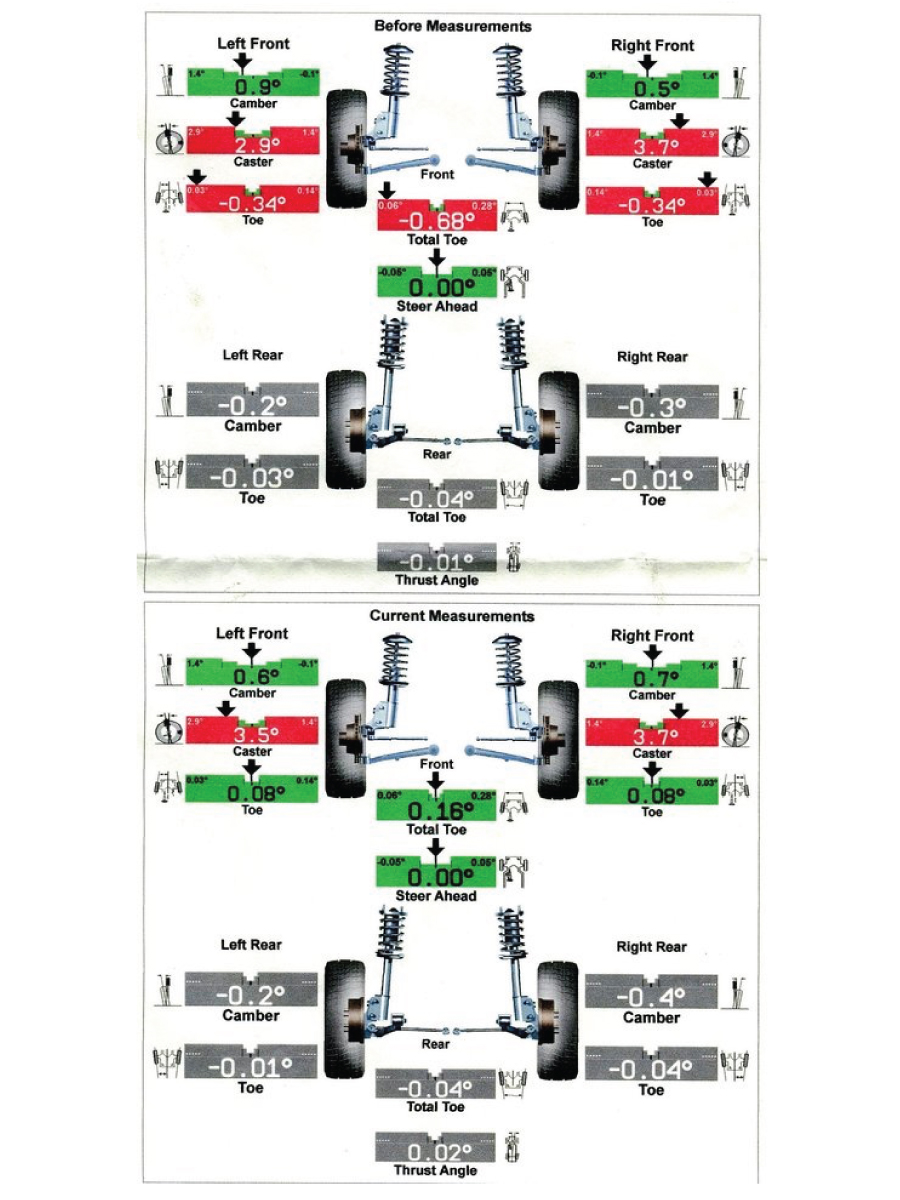
Example: Alignment print out from a professional alignment shop.