Completing a Tacoma alignment or 4Runner alignment requires a series of precise adjustments to the front suspension system to ensure your vehicle drives straight, handles properly, and maximizes tire life. Most of these adjustments are performed through the lower control arms and steering tie rods, which allow technicians to dial in the correct camber, caster, and toe settings. When you lift or modify your suspension, the factory geometry changes, and without a proper alignment, you may experience uneven tire wear, poor steering response, or unwanted pulling to one side. By performing a professional Tacoma or 4Runner alignment after installing a lift kit or new suspension components, you’ll restore the proper angles, improve ride quality, and protect your investment in both your suspension and your tires.
- What is an alignment?
- Why you need an alignment
- What is Camber, Caster & Toe?
- How adjustments are made for an alignment
- Cam Tab Adjusters
- Why is a UCA needed when lifting your Tacoma?
- How much lift before UCA is needed?
- Ideal alignment setup for a lifted Tacoma
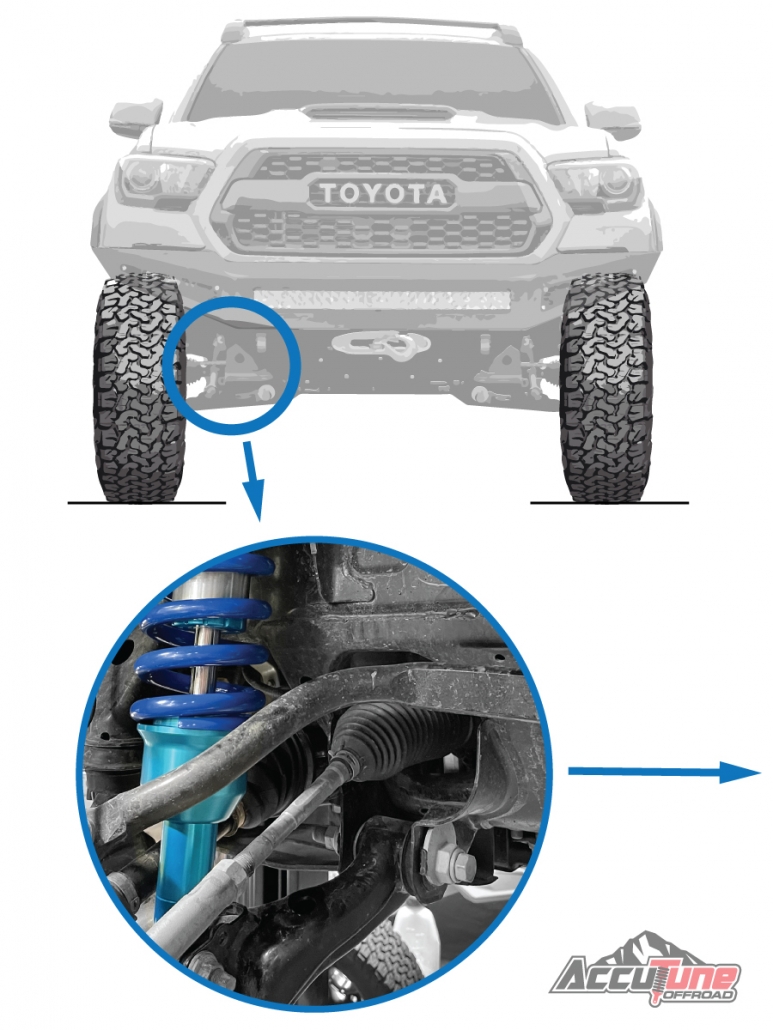
05+ Toyota Tacoma, passenger side front suspension

Cam Tab Adjusters are an offset bolt and washer assembly designed to adjust the position of the lower control arm on the frame. By rotating the offset bolt, you can fine-tune suspension geometry to achieve proper camber and caster settings, which are critical for correct alignment and handling.
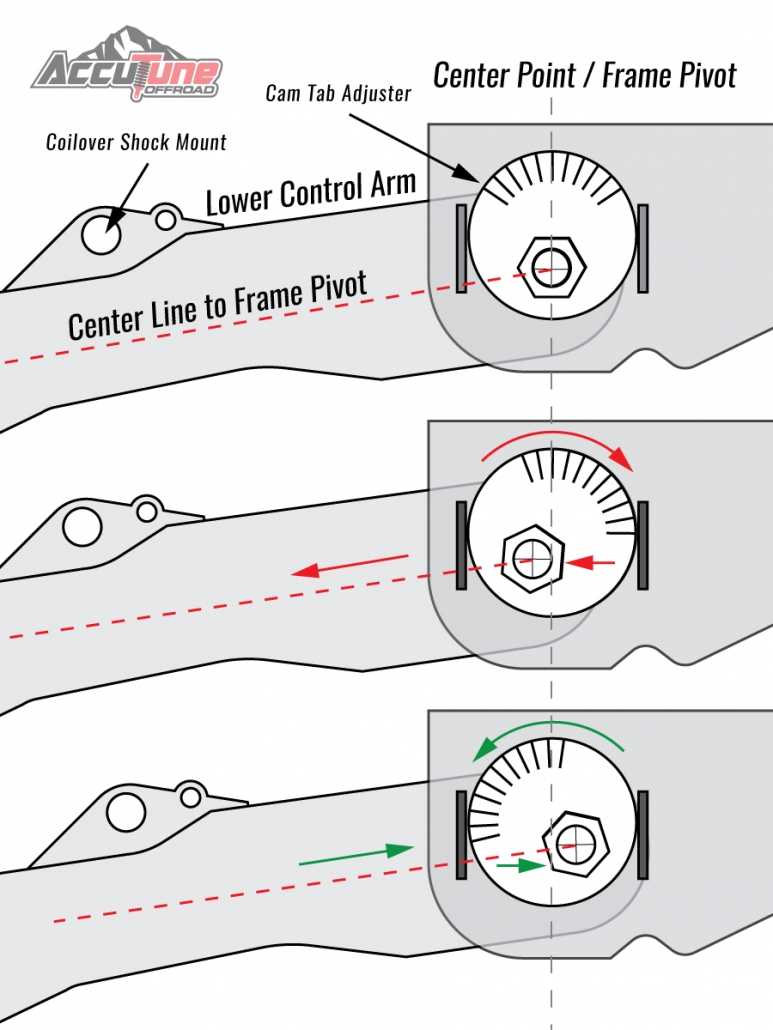
By rotating the cam tab adjusters, you can move the lower control arm either closer to the frame or further away. This adjustment changes suspension geometry, helping to set the correct camber and caster angles needed for a proper Tacoma or 4Runner alignment.
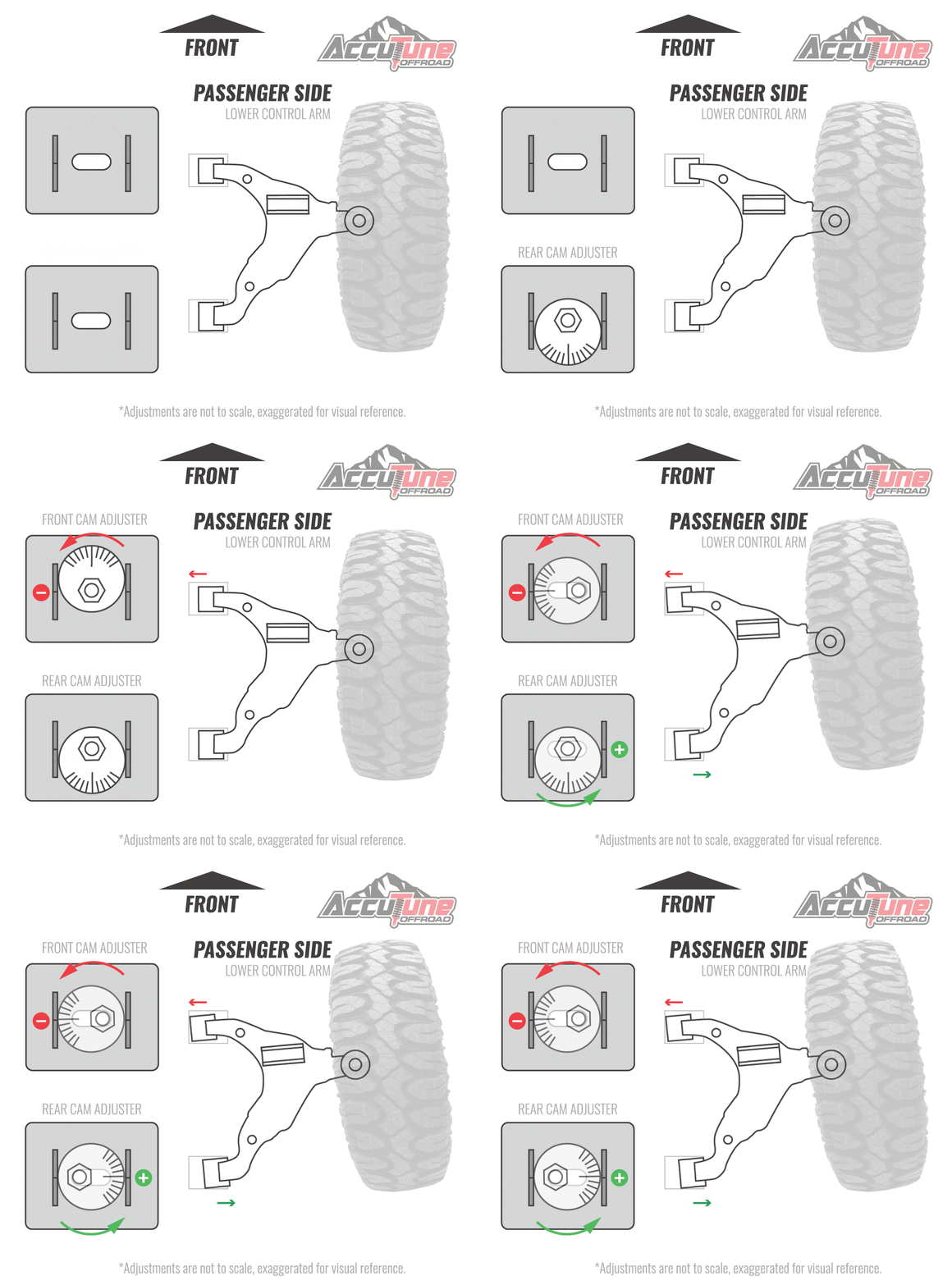
Turning the cam tab adjusters moves the lower control arm either closer to or farther from the frame.
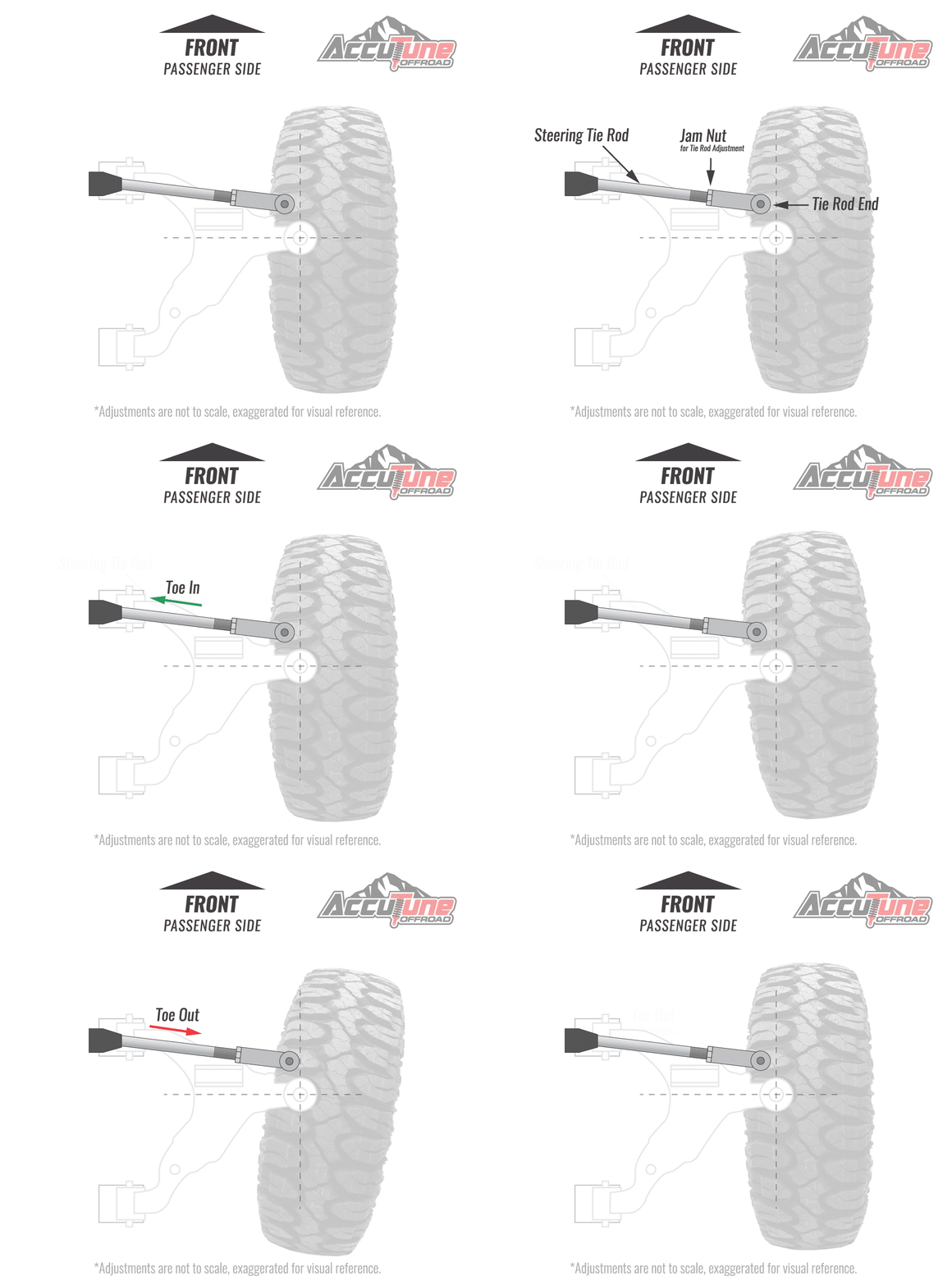
Adjusting the tie rods will change the toe settings.