- What is an alignment?
- Why you need an alignment
- What is Camber, Caster & Toe?
- How adjustments are made for an alignment
- Cam Tab Adjusters
- Why is a UCA needed when lifting your Tacoma?
- How much lift before UCA is needed?
- Ideal alignment setup for a lifted Tacoma
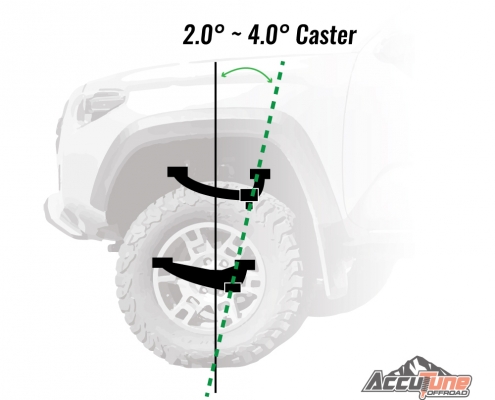
How Much Caster Do You Need?
Toyota’s caster recommendations vary by year and model, ranging from a low of 1.2° on a 2017 Tacoma to a high of 3.9° on a 2005 4Runner. In our experience, Tacomas and 4Runners handle best with approximately 2.0° to 4.0° of caster. This range provides a balanced, stable ride while keeping the tires positioned reasonably far forward in the fender.
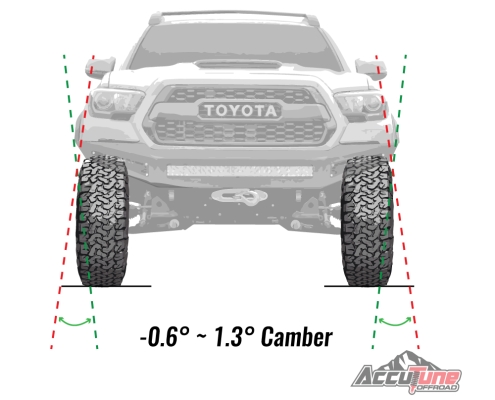
How Much Camber Do You Need?
Toyota’s camber specifications vary by model and year, ranging from -0.6° on a 2005 4Runner to 1.3° on a 2017 Tacoma. Negative camber improves cornering stability both on and off-road, while positive camber can make steering feel lighter but leads to uneven tire wear. For off-road vehicles, we recommend keeping camber in a more neutral range of approximately -0.5° to +0.8° for the best balance of handling and tire longevity.
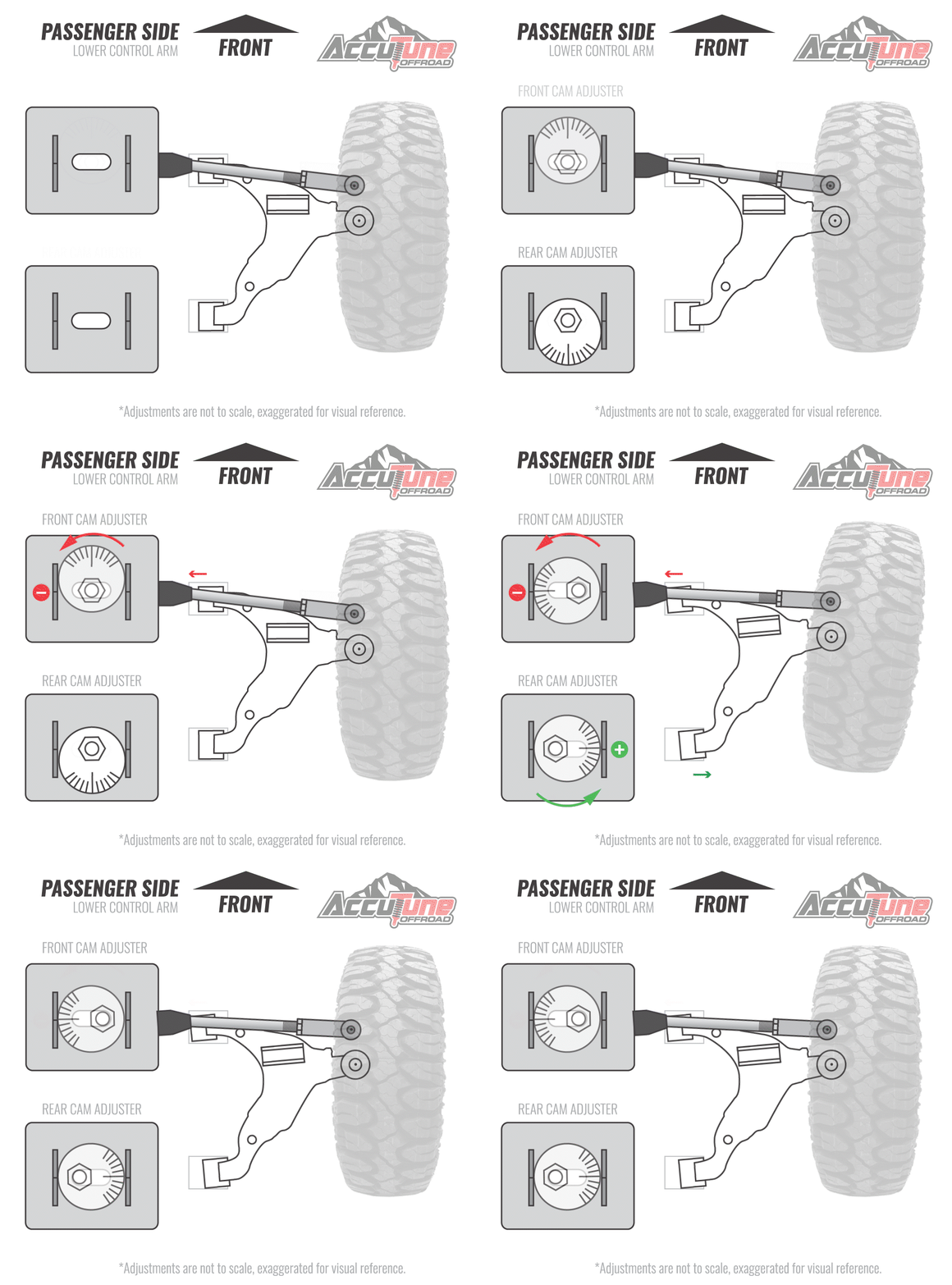
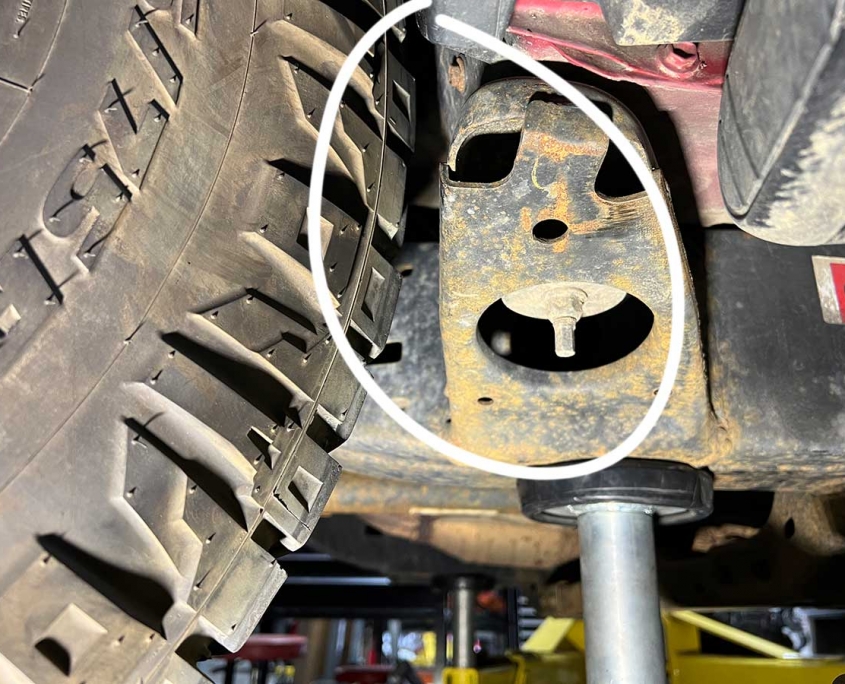
How to get tire far forward in the fender
- Front cam all the way in
- Rear cam all the way out
- Minimum caster
Tire Fitment
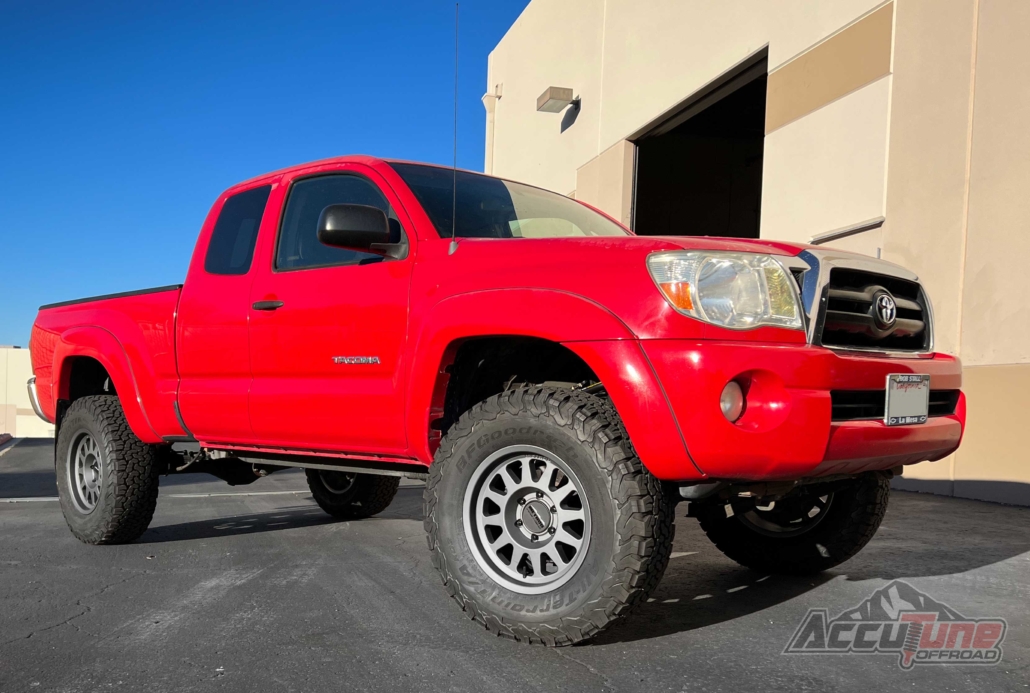
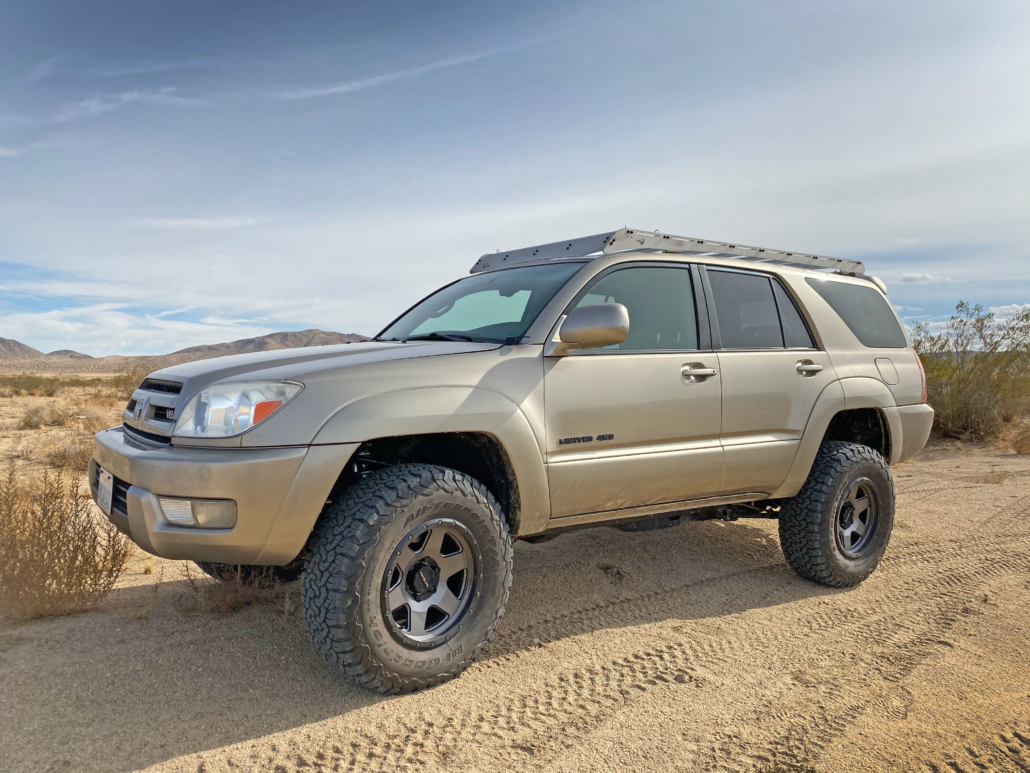
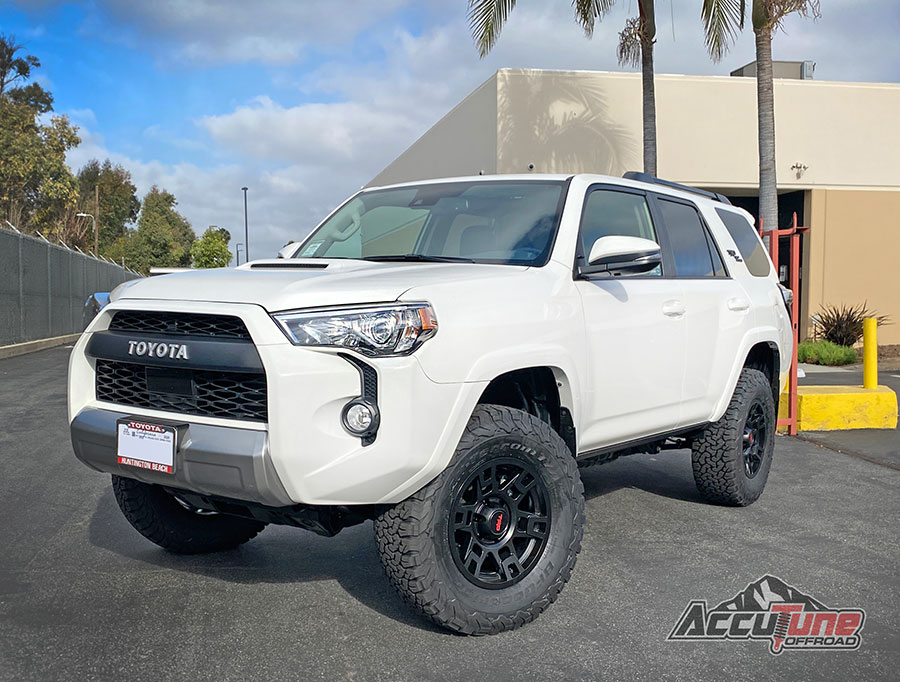
Installing larger tires on a Tacoma or 4Runner typically requires aftermarket upper control arms and, in some cases, may also involve fender trimming or a cab mount chop. Not all upper control arms are created equal—some designs offer better clearance for bigger tires than others. Because tire sizes, wheel offsets, and control arm designs vary widely, it’s difficult to guarantee a perfect fit for every setup.
Based on our experience, the most common tire and wheel combo that fits well is 285/70R17 tires on wheels with 4.5″ backspacing.