KDSS Suspension Tech
January 21, 2020
What is KDSS and what does it do?
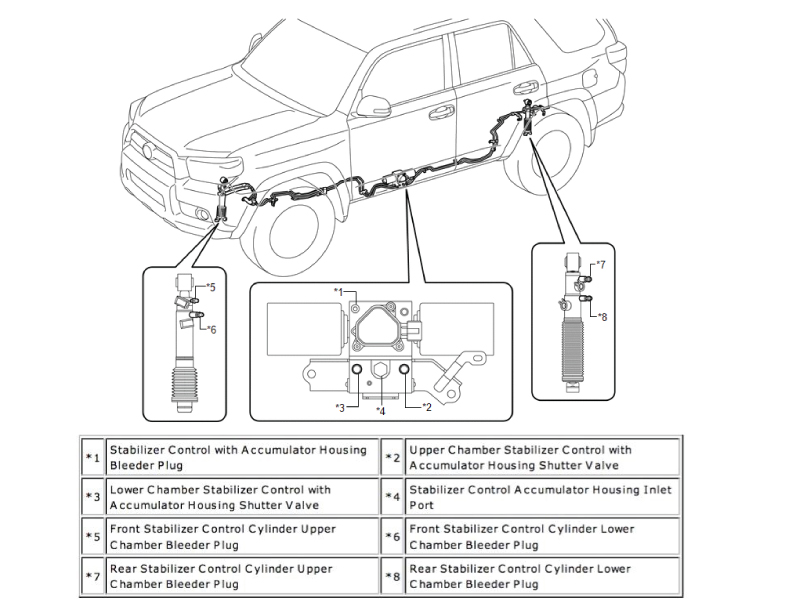
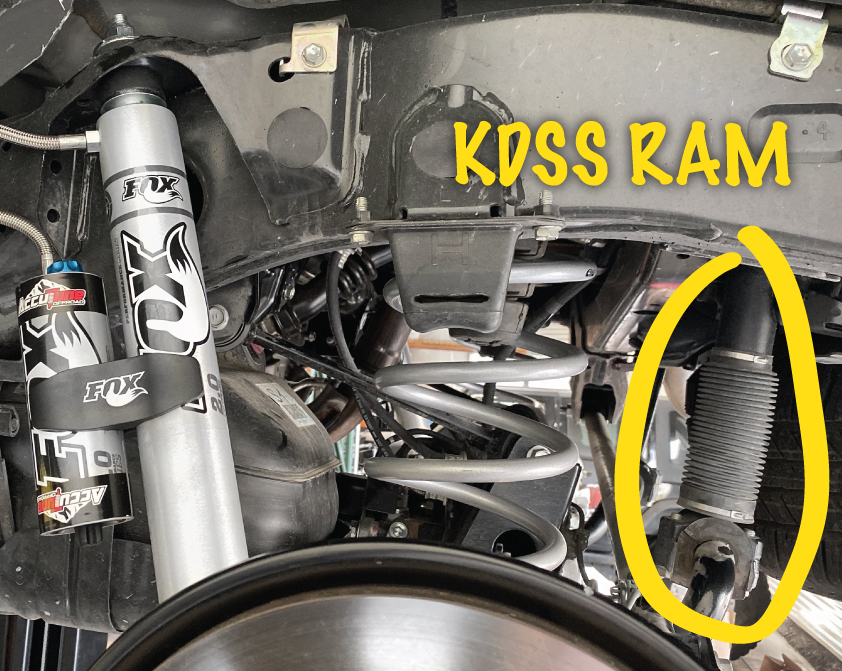
KDSS, or Kinetic Dynamic Suspension System, uses hydraulic rams connected to a heavy-duty sway bar to manage body roll and improve articulation. Its primary purpose is to enhance on-road handling by reducing body roll, while also allowing for increased articulation and stability off-road. However, the system’s unique design can present challenges when lifting your 4Runner. Read on to learn how to overcome these obstacles and get your 4Runner riding and looking better than ever.
How does the KDSS system work?
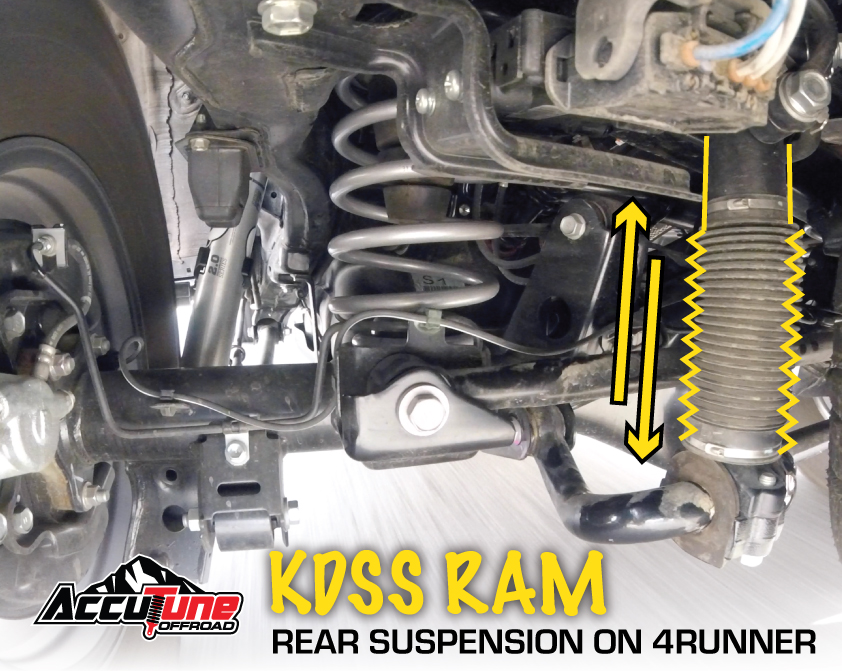
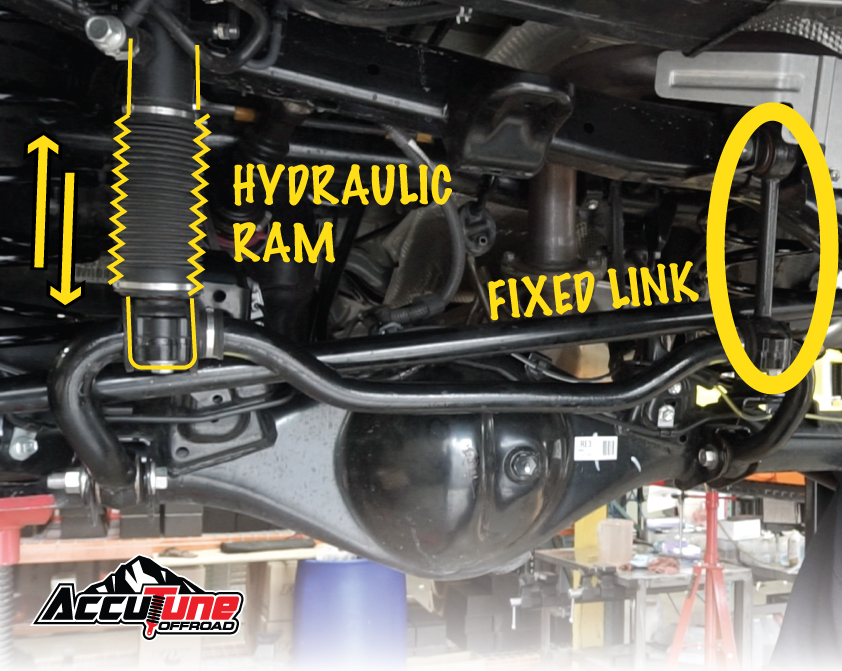
The KDSS system features a hydraulic ram mounted to the passenger side of the sway bar and a fixed link on the driver side. The sway bar itself is extremely stiff, and the hydraulic ram extends or compresses as needed to manage body roll and improve articulation. This dynamic response helps balance on-road stability with off-road capability.
Year models it comes on? (optional)
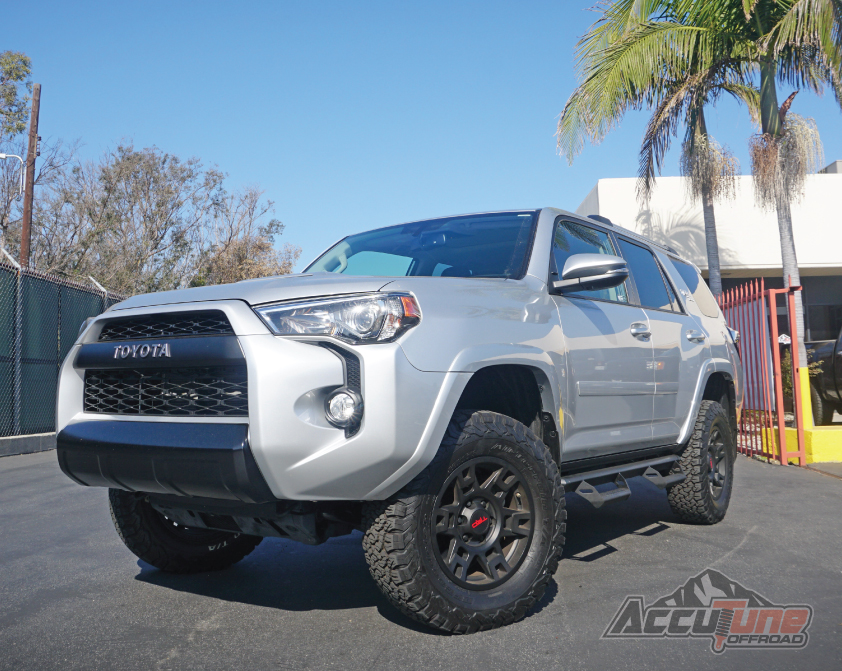
2010+ Toyota 4Runner TRD Offroad
2008+ Toyota Land Cruiser
2004+ Lexus GX
2010+ Toyota Prado
Can you lift 4Runners with KDSS?
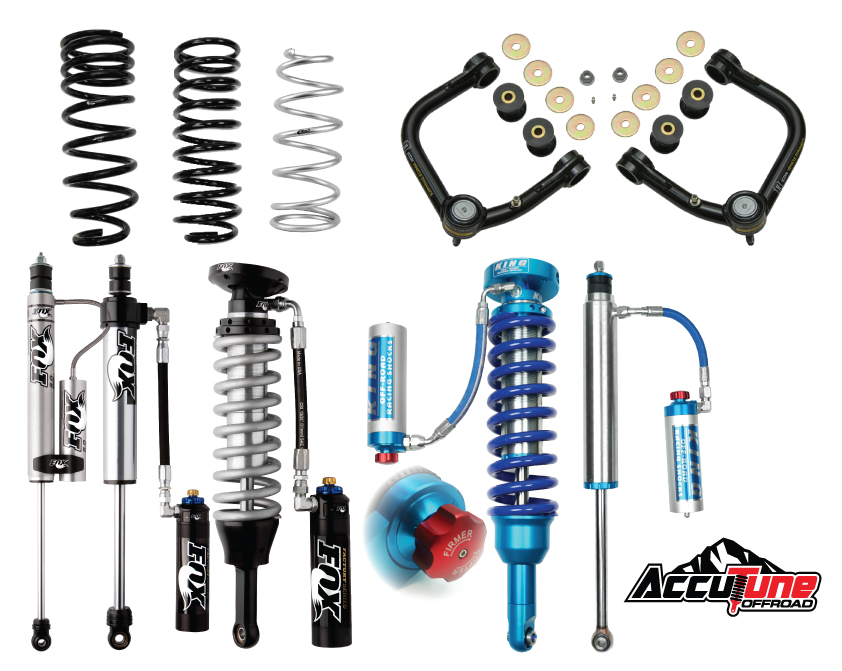
KDSS-equipped 4Runners can be lifted, but there are two common issues to watch for: KDSS lean and compromised ride quality.
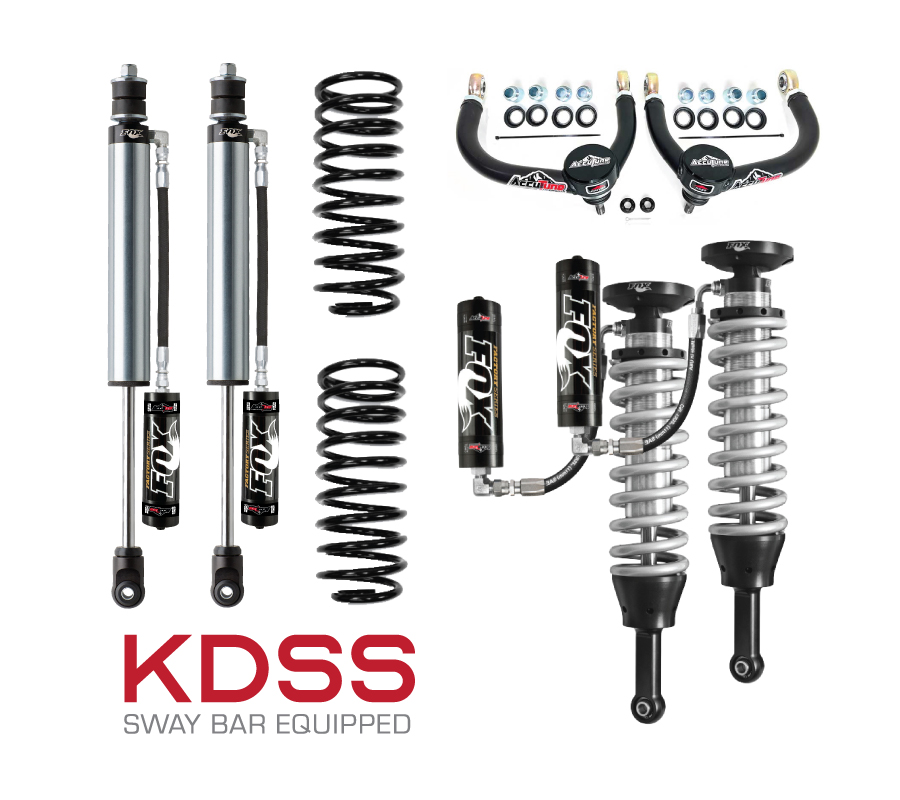
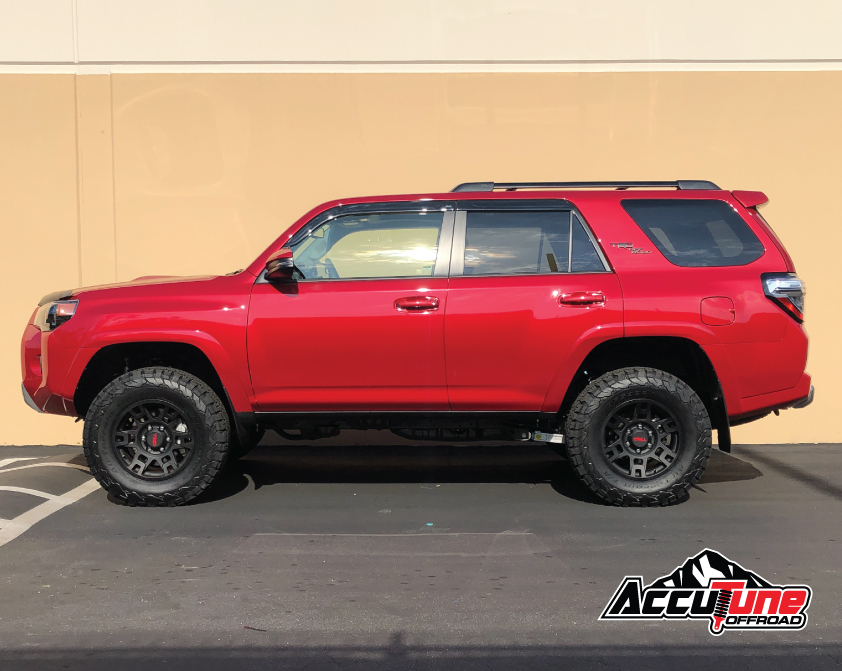
Due to the system’s design limitations, we recommend a maximum lift of 2.5” in the front and 1” in the rear for KDSS-equipped models. This setup has proven to maintain excellent ride quality while avoiding the common leaning issues, making it a reliable and balanced choice for both daily driving and off-road use.
What causes KDSS lean?
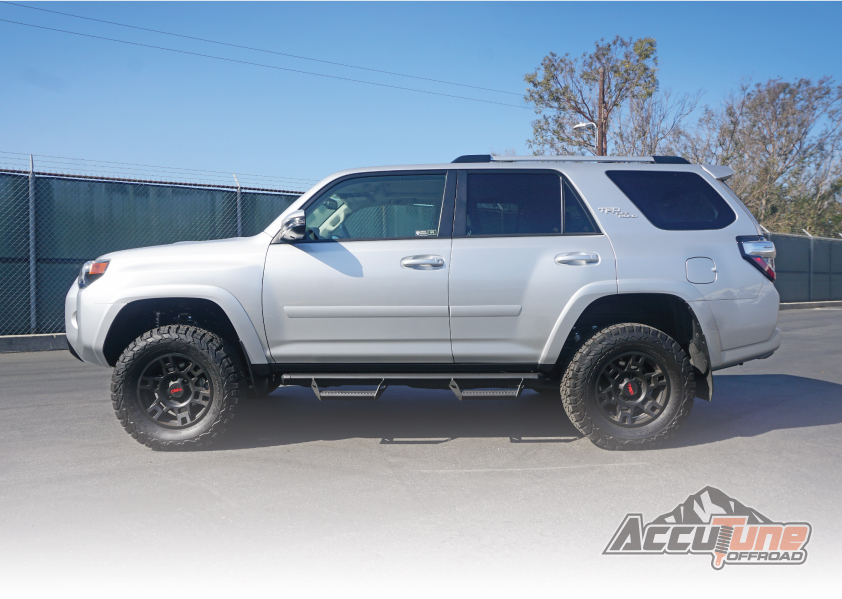
KDSS lean is the most common problem when lifting your 4Runner too high. The electronics and hydraulics can’t handle excessive lift, causing the vehicle to lean toward the driver’s side. The only reliable fix we’ve found is to avoid lifting it too much.
What are the travel limits in the rear?
Rear suspension travel on KDSS-equipped 4Runners is primarily limited on the passenger side. In some cases, the stiff sway bar and its fixed mounting point reach their limits and bind up, while in others, the panhard bar contacts the axle. So far, we haven’t found any rear panhard bar that provides a significant increase in rear travel.
KDSS 4Runners can run either stock travel or extended travel rear shocks. Extended travel shocks improve articulation on the driver side rear but cause the track bar to hit the axle during droop on the passenger side. The longest shock that fits without interference measures 25” from the upper mount to the center of the lower bolt. Many KDSS 4Runners use shocks 26” or longer without issues—they simply don’t utilize the full shock travel.
 KDSS Drop Bracket
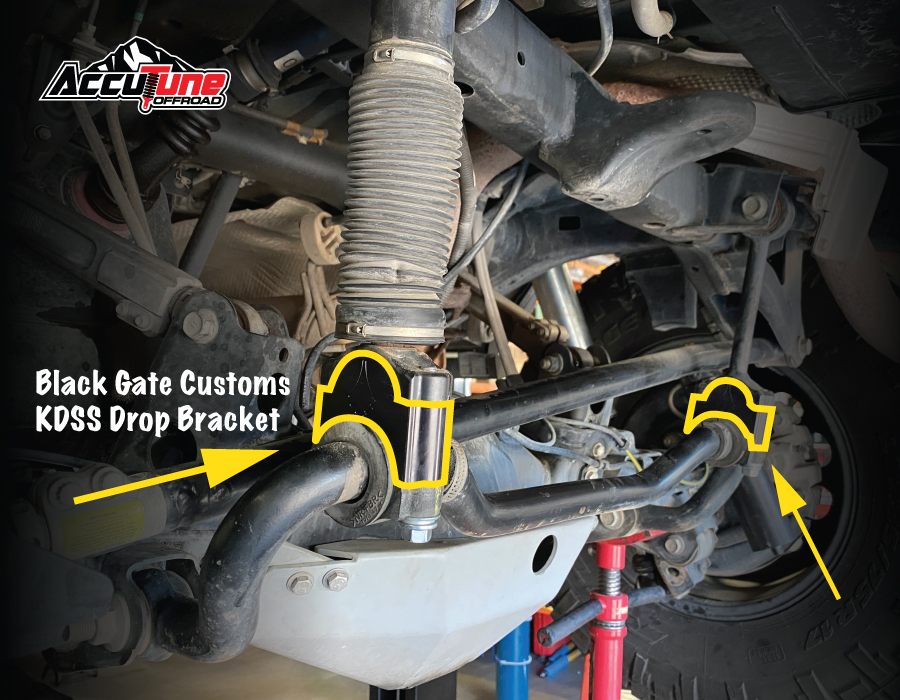
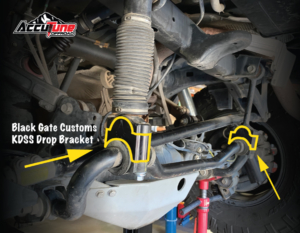
Black Gate Customs offers a KDSS drop bracket designed to prevent the track bar from contacting the sway bar at full suspension droop. This bracket helps accommodate greater lift heights but pushes the sway bar outward, increasing the risk of rock strikes during off-road use. More info about these brackets can be found here.
Can you disconnect the KDSS system?
We do not recommend disconnecting the KDSS system, as it can trigger check engine lights and may void your warranty. Since the system is both electronic and hydraulic, it should be serviced only by a dealer.
Summary:
The KDSS system improves on-road handling but limits lift height and rear suspension travel. If you plan to lift your 4Runner more than 2.5” up front and 1” in the rear, we recommend choosing a non-KDSS model instead.