When are Tender Coils ok to use?
April 14, 2020
 What are Tender Coils?
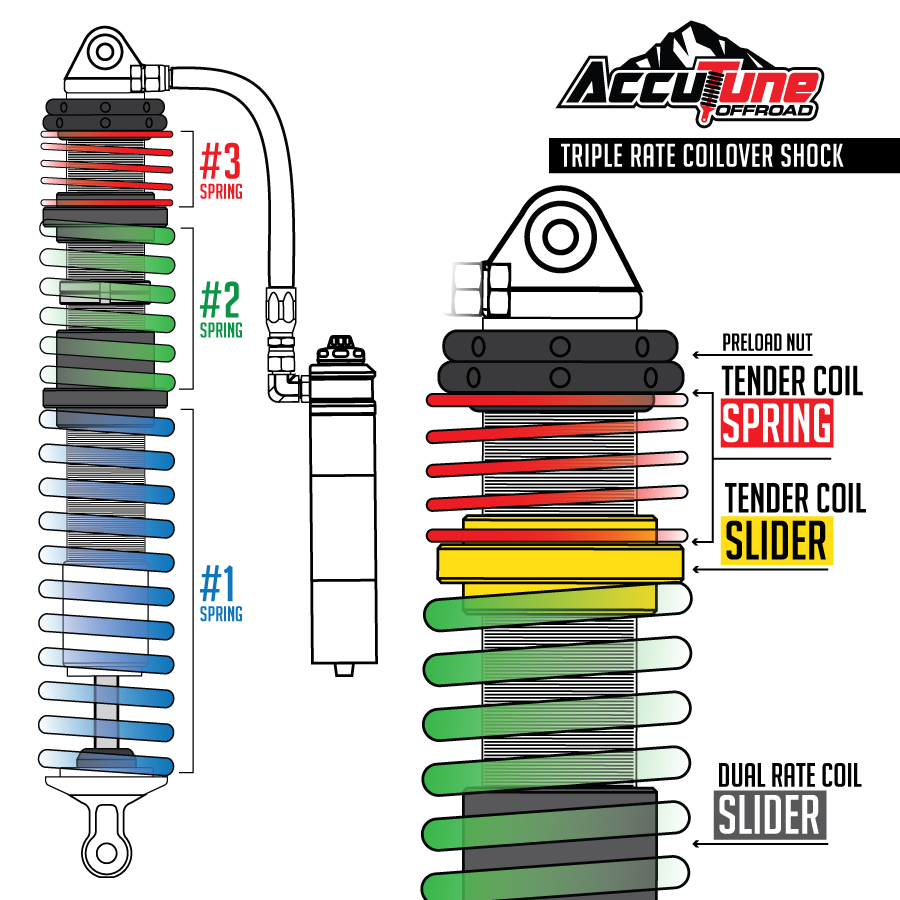
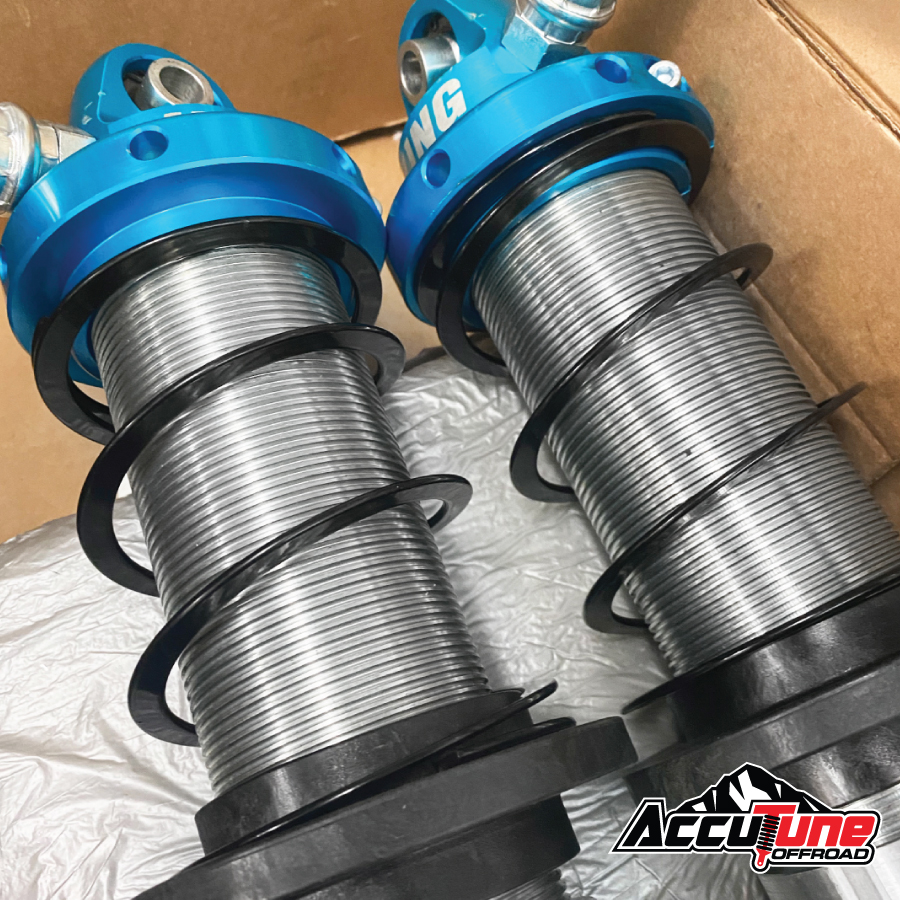
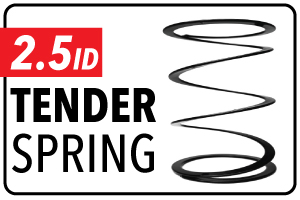
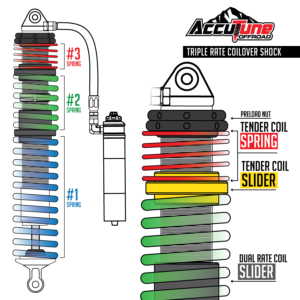
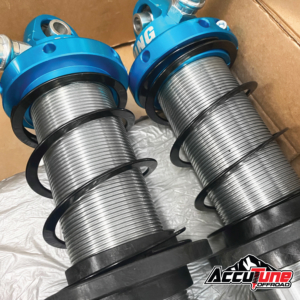
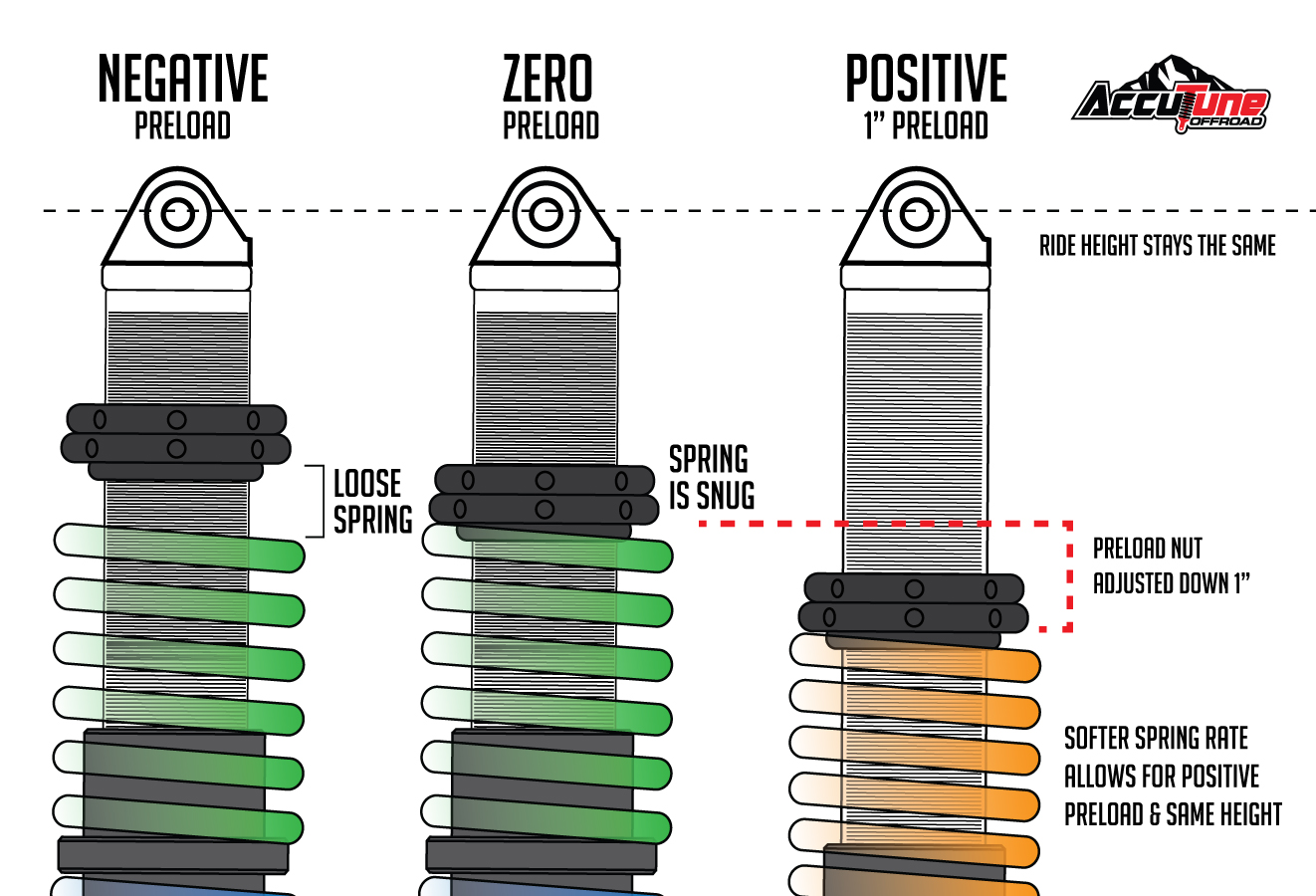
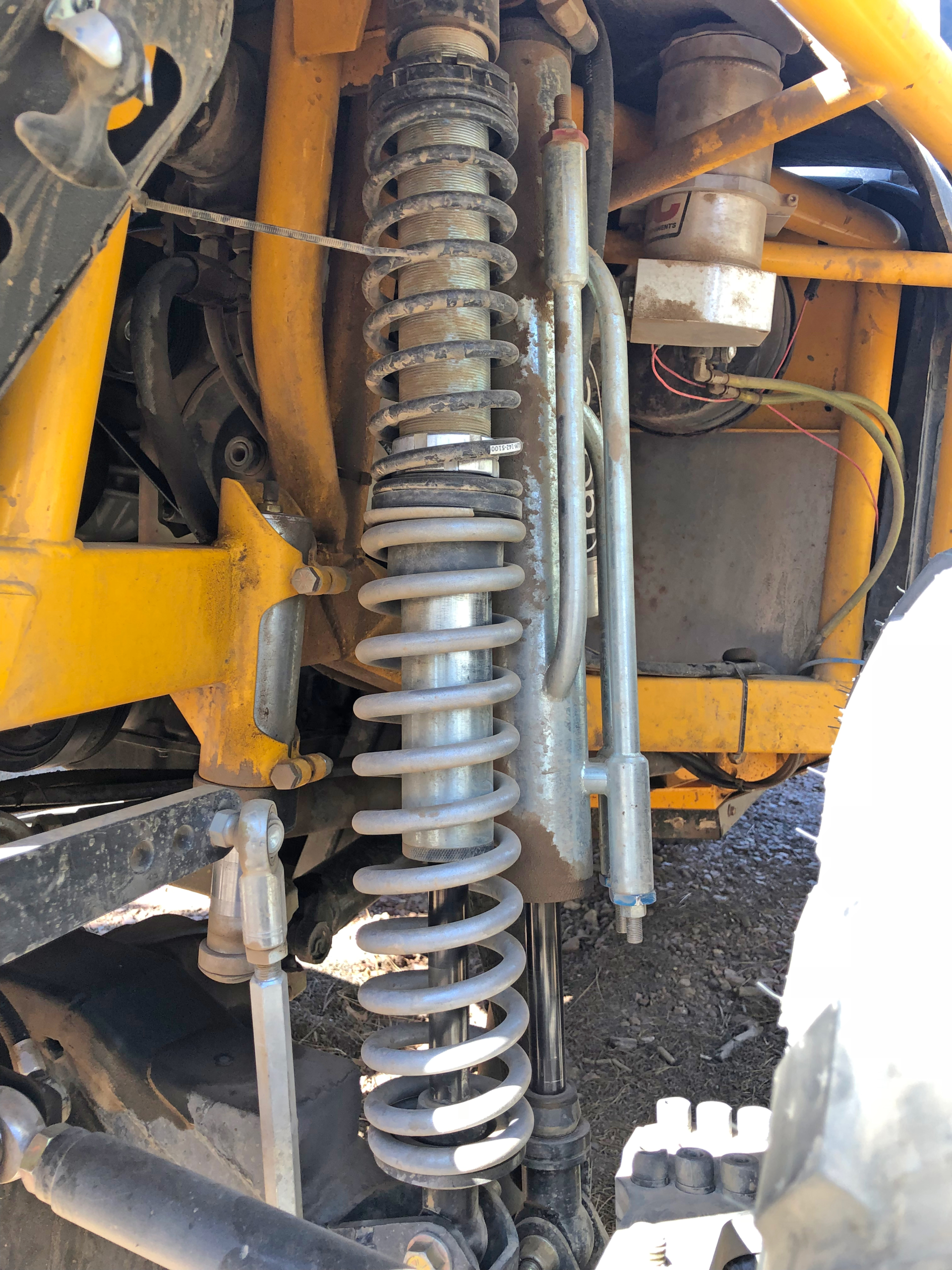
Tender coils are short, low-rate springs often placed at the top of some coilovers. Their purpose is to keep the main springs tight when they loosen due to negative preload. You usually find them on lightweight vehicles where spring rate options are limited.
Why don’t we always use tender coils?
In an ideal setup, springs always have positive preload. Positive preload pushes the axle to droop, improving traction during articulation and helping tires stay in contact with the ground over rough terrain and whoops. This benefits both off-road performance and on-road comfort. With positive preload, springs stay tight and tender coils aren’t needed. Tender coils are only required when a coilover experiences negative preload.
When do we recommend tender coils and negative preload?
Setting up suspension with positive preload allows for lower spring rates compared to negative preload. Stiff springs don’t compress enough to generate adequate force at full droop, causing them to loosen and require tender coils. Stiff springs combined with tender coils are used when the spring rates suggested by a typical positive preload setup are too soft—either due to limited spring options or because light-rate springs don’t suit the vehicle’s intended use.
The most common reasons for needing lower spring rates are excessive droop or a very light vehicle weight.
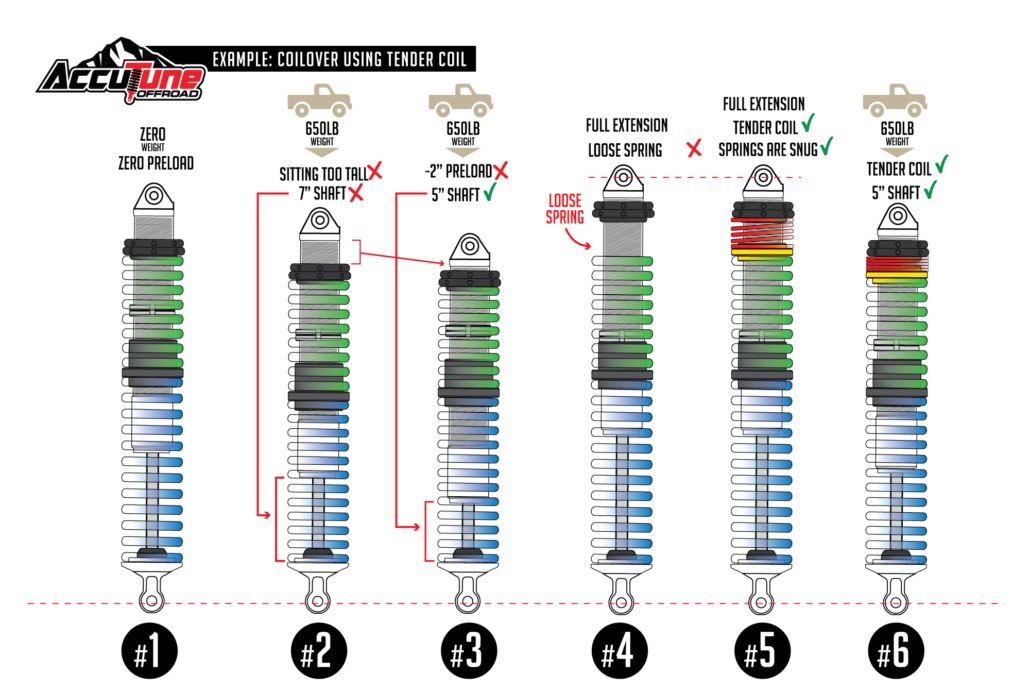
1: Bob installs springs with zero preload
2: Bob installs coilovers on vehicle. With full weight on the coilovers, vehicle is sitting 2″ too tall.
3: Bob lowers preload 2″ to get correct ride height (because lighter springs are not suitable for this vehicle).
4: Now springs are loose at full extension.
5: Bob installs tender coils to keep springs tight at full extension.
6: Ride height is correct with tender coils.
*Installing lighter springs are the preferred option on most vehicles
Installing Tender Coils?
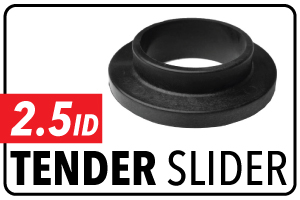
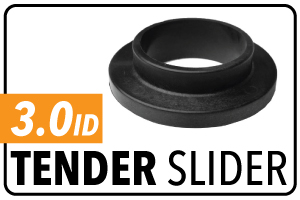
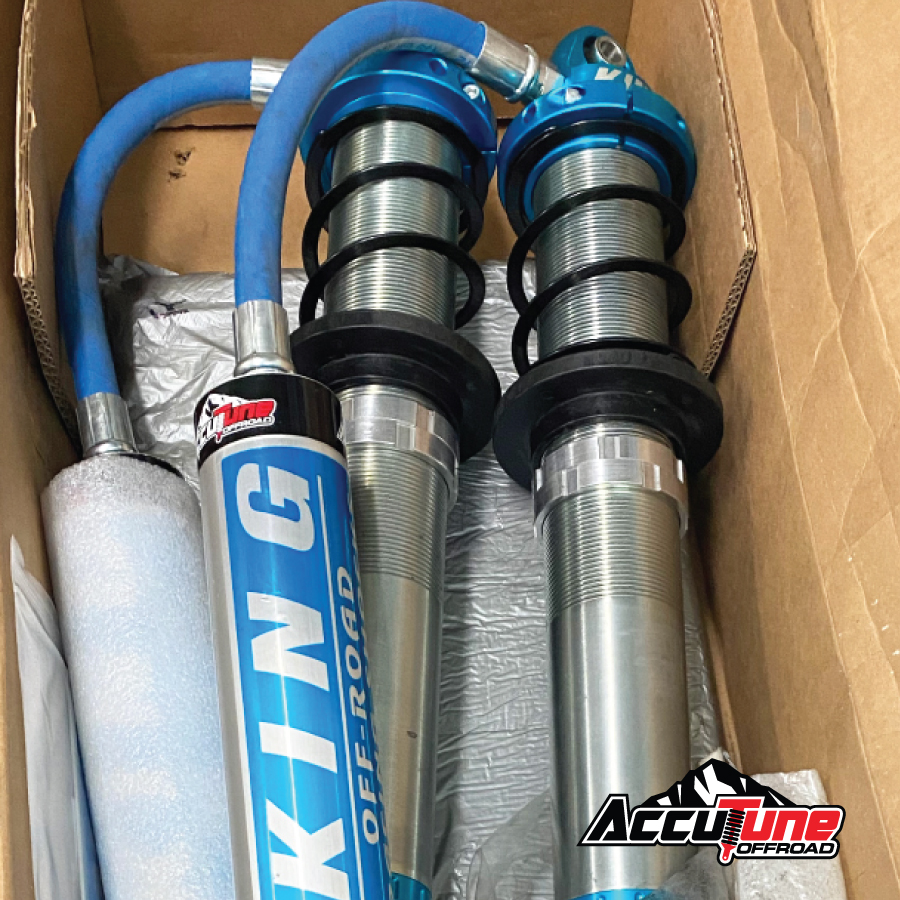
Installing tender coils also requires a tender coil slider. To install both, the top portion of the shock assembly (top cap) must be removed. After removal, the slider and tender coil spring can be installed. Because this process involves disassembling the shock, it should be performed by a professional.

Are lightweight vehicles more prone to needing tender coils?
Lightweight vehicles are more likely to need tender coils for several reasons:
- Springs with light enough rates aren’t always available.
- Positive preload may not provide sufficient load-carrying capacity for lightweight buggies.
- Lightweight vehicles, especially rock crawlers with low gearing, often experience torque lean.
To address these challenges, we recommend:
- Running sway bars front and rear to improve stability.
- Limiting droop to 6” or less to maintain higher spring rates.
- Increasing up-travel if more total suspension travel is desired.
- Ensuring well-refined suspension geometry to reduce body roll and torque lean.
- Mounting shocks to the links to improve spring selection options and prevent shock bowing.
Why aren’t light rate springs available?
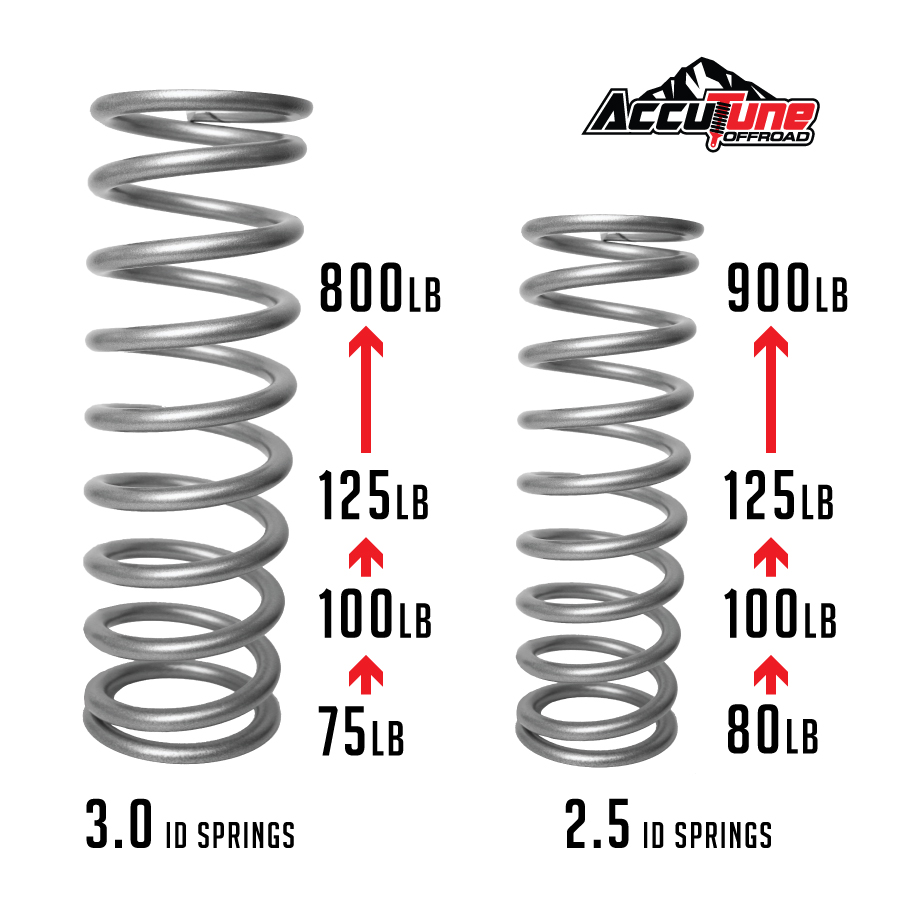
As springs get lighter, they become less sensitive to small changes in spring rate. Typical 25 lb/in increments are too large to provide light-rate springs that fit many specific applications. Manufacturers rarely produce more variations because light-rate springs have low demand and higher warranty claims due to issues like bowing.
Why are light rate springs more prone to bowing?
Light-rate springs use small-diameter wire, which isn’t very stiff and makes the spring less sturdy and more prone to bowing. This problem is worsened by the fact that vehicles needing light-rate springs often require them to be very long, increasing the likelihood of bowing. Even when manufactured properly, bowing issues with light-rate springs are common and often can’t be fully resolved.

Why won’t light springs function correctly?
Springs are a crucial part of the suspension, influencing load-carrying capacity, handling, and how the suspension responds under load.
Load-carrying capacity matters for any vehicle that experiences weight changes. If spring rates are too low, the vehicle will sag excessively under added weight, sacrificing critical up travel and increasing the risk of bottoming out.
Handling and stability also suffer with low spring rates. We rely on spring stiffness and dual-rate nuts to maintain control and stability because if shocks handled it all, they’d have to be much stiffer—and we don’t tune shocks primarily for handling.
Springs control suspension movement and affect how the vehicle reacts under load. Off-road vehicles with high horsepower or low gearing often experience suspension torque-over. Proper suspension geometry, shock valving, and spring rates all work together to resist this force—each must be correctly set for the suspension to perform as intended.
Why don’t we recommend having more than 9” of droop for most vehicles?
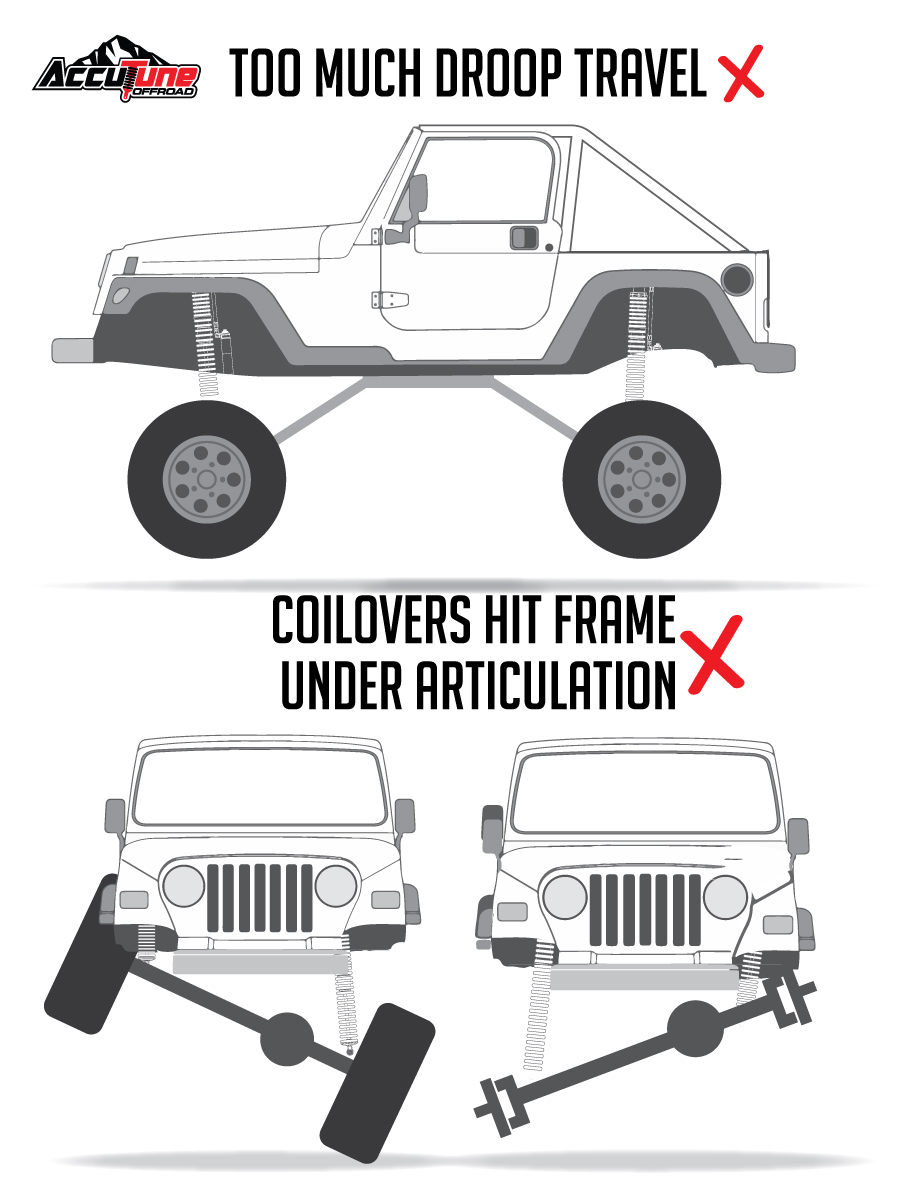
We’ve found that for most applications, once droop exceeds about 9”, spring rates drop off sharply and start causing the issues mentioned earlier. Going beyond 9” of droop on typical builds doesn’t improve off-road performance and can actually create problems.
Performance doesn’t improve because you’ll likely need tender coils, which don’t apply any downward force on the axle. Without that downward force, the tire loses traction and stability.
Shifting some droop travel into up travel provides a more comfortable ride and a better-balanced suspension. More up travel lets the tire absorb bumps before hitting the bump stops. During articulation, the tire can move upward more before lifting the chassis, resulting in a more stable, balanced vehicle.
Excessive droop on solid axles also causes excessive side-to-side swinging, making the tires rub against the body or chassis. A balanced amount of up and down travel reduces axle swing and can even increase overall suspension travel.
Summary
Tender coils are necessary when springs can’t be soft enough to maintain positive preload. They help prevent the main springs from loosening and protect the shocks from damage caused by negative preload. Common causes of negative preload include excessive droop or lightweight vehicles that require stiffer springs than what positive preload setups can accommodate.