Spacer Lift vs Preload Spacer vs Coilover Preload
The good, the bad, the ugly
January 24, 2023
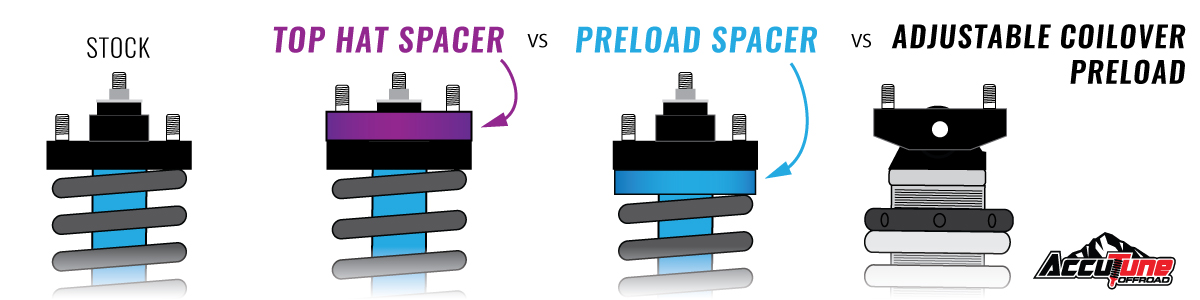
When it comes to lifting your IFS truck or SUV, there are plenty of options to consider. For many, an affordable spacer lift can seem like a no-brainer, but while the price is attractive, there are performance trade-offs you might not be aware of. In this guide, we’ll break down the potential drawbacks of spacer lifts and give you a clear visual look at how your suspension behaves in motion. We’ll show exactly what happens with a top-hat spacer lift versus a preload spacer, and compare both to an aftermarket adjustable coilover. These visuals will help you understand how each option affects your ride and what to expect if you choose one for your truck or SUV.


Animation #1 | Spacer Lift
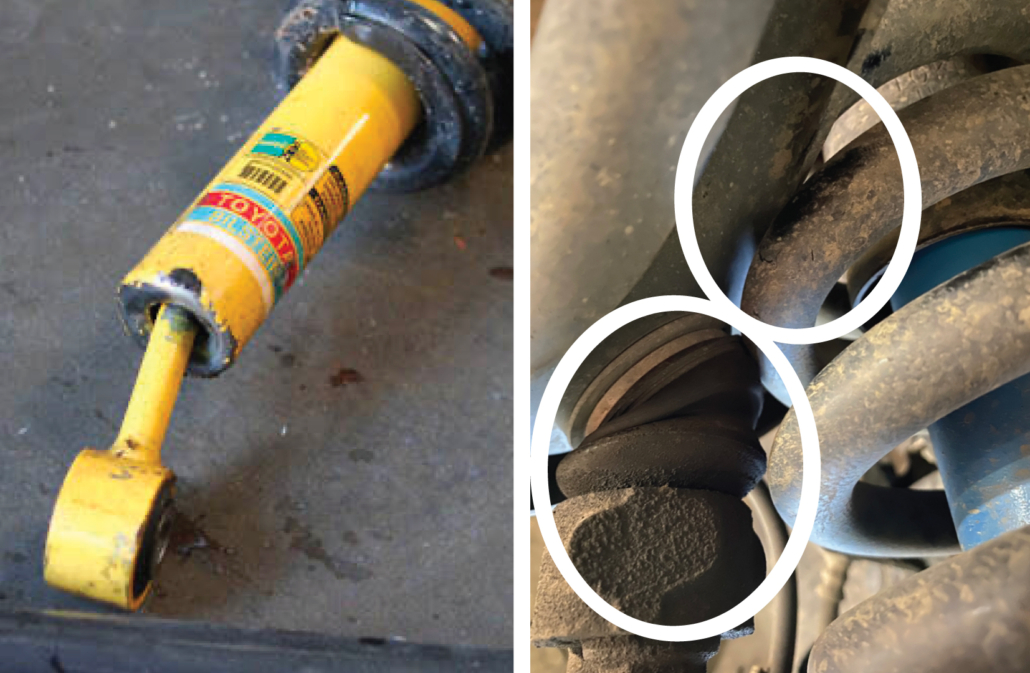
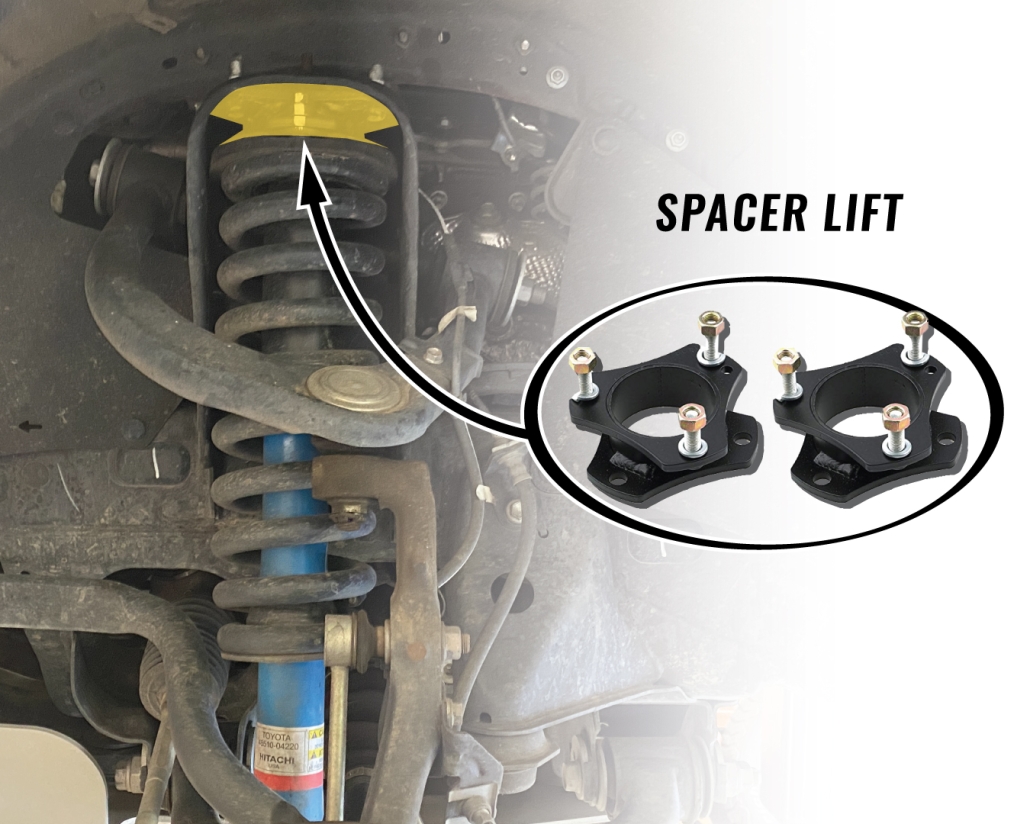
[left] Shock Failure due to spacer lift and incorrect bump stop height. [right] Spacer lift causing UCA to hit coilover at full droop
SPACER LIFT
What is a spacer lift?
A typical coilover spacer lift uses a spacer or block positioned between the top of the coilover and the shock mounting point on the frame. Essentially, it lowers the coilover mounting point by the height of the spacer to lift the vehicle. However, the spacer height does not equal the actual lift at the wheel. Because independent front suspension (IFS) uses a motion ratio, changes at the coilover translate differently at the wheel. For example, a motion ratio of 0.5 means that 1″ of coilover height change results in 2″ of lift at the wheel. Spacer lifts come in a variety of sizes and materials.
Pros:
-
Very affordable compared to aftermarket replacement shocks.
-
Simple to install with basic hand tools.
-
Popular for drivers who want to level their truck or SUV and aren’t planning serious off-road use.
Cons:
-
Spacer lifts are the most basic lift option and offer no real performance benefits. They simply lower the shock mounting point without upgrading the shock itself.
-
Typically used with stock shocks, so ride quality and handling remain largely unchanged.
-
Not adjustable and usually come in a fixed height left to right.
-
Can create serious issues off-road:
-
Shortened bump stops: The shock may bottom out before the bump stop engages, risking damage.
-
Excessive droop: At full droop, the upper control arm can hit the coilover or spring.
-
Ball joint stress: Full droop can push the upper control arm ball joint beyond its intended range, causing premature wear or failure.
-
-
Additional problems can occur with steering joints and CV axles.
Note: Spacer lifts are primarily for street-driven vehicles that want a lifted look. They should not be confused with coil spring preload spacers, which function differently.
[View Animation #1]
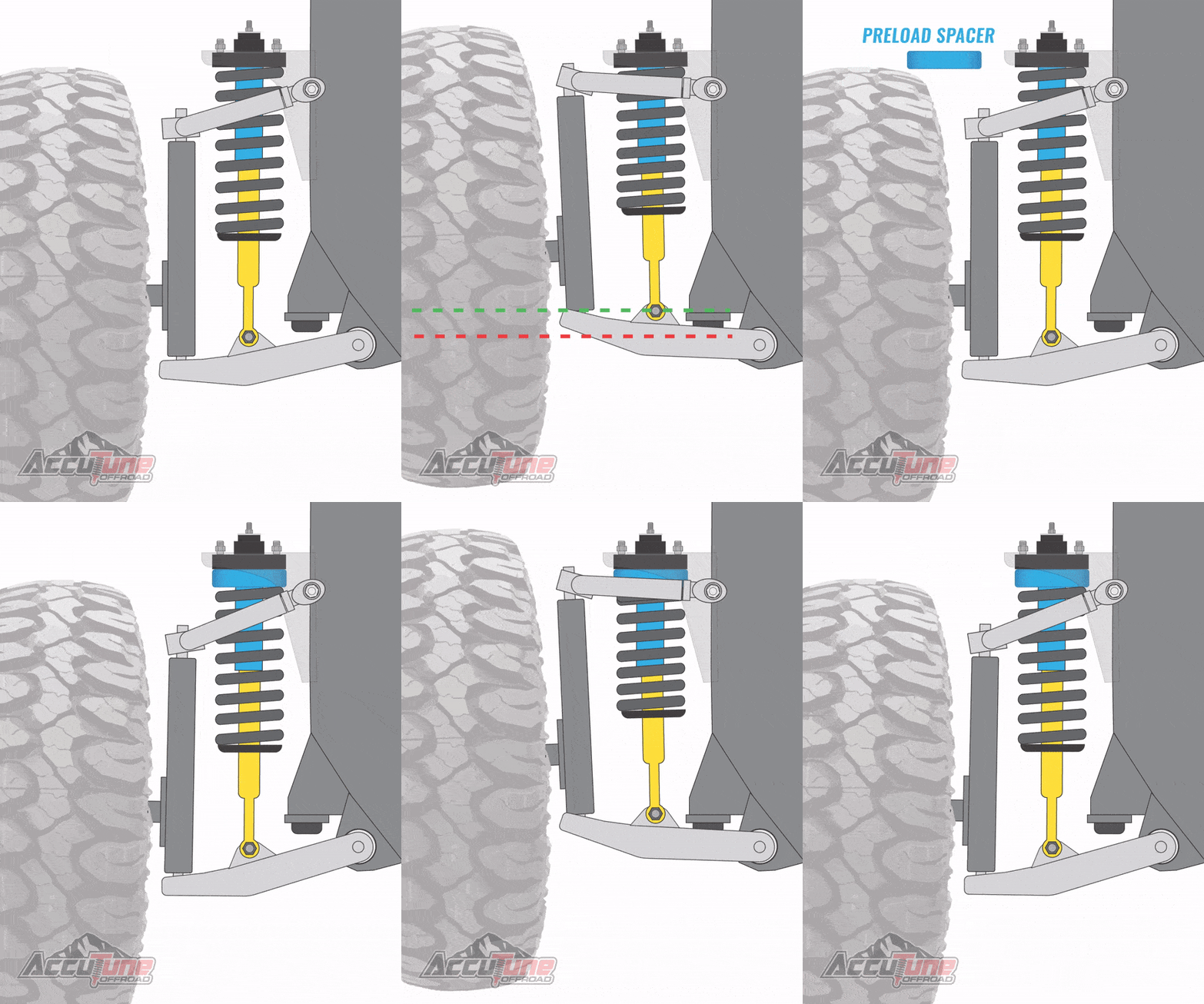
Animation #2 | Preload Spacer Lift
PRELOAD SPACER LIFT
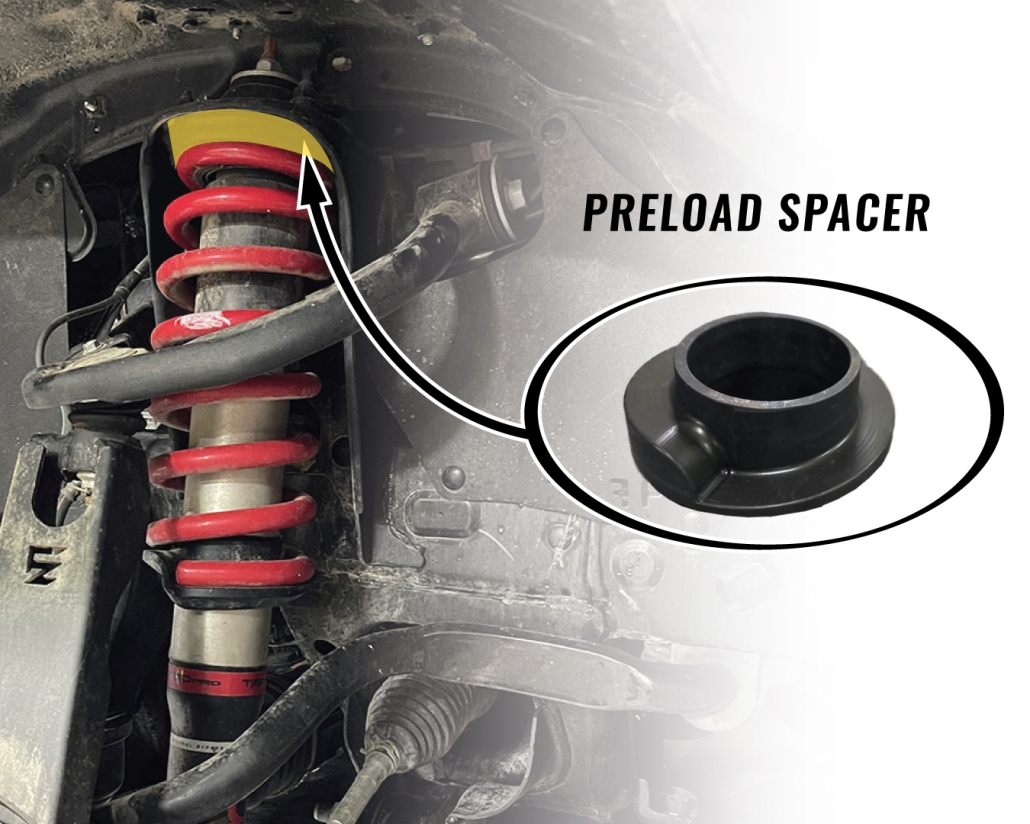
A preload spacer lift uses a spacer placed between the top of the coil spring and the top of the coilover assembly [See animation #2]. These are usually installed on stock coilovers and do not change the shock’s mounting points or its compressed/extended length. Preload spacers are often used on vehicles with added weight to maintain stock height or achieve a small lift. Similar to a top-hat spacer lift, the spacer height does not equal the lift at the wheel, as the motion ratio still applies. Essentially, these spacers add preload to the coil spring to gain lift.
Pros:
-
More affordable than replacement aftermarket shocks.
-
Helps regain ride height after adding weight to the vehicle.
-
No need for aftermarket upper control arms and no changes to shock mounting location.
Cons:
-
Can force the shock to be too extended at ride height, reducing down travel and increasing the chance of topping out the shock.
-
Vehicles with internal bypass shocks may experience ride-quality issues, as these shocks are designed to operate within a specific range; adding preload can push them closer to the top-out zone.
-
Installation requires a spring compressor—more than basic hand tools are needed.
-
Since stock springs are usually retained, there is no performance gain.
-
Can be a temporary solution for setups that really need a heavier spring rate.
-
Too much preload can risk the stock spring reaching coil bind.
Note: Preload spacer lifts are not the same as top-hat spacer lifts.
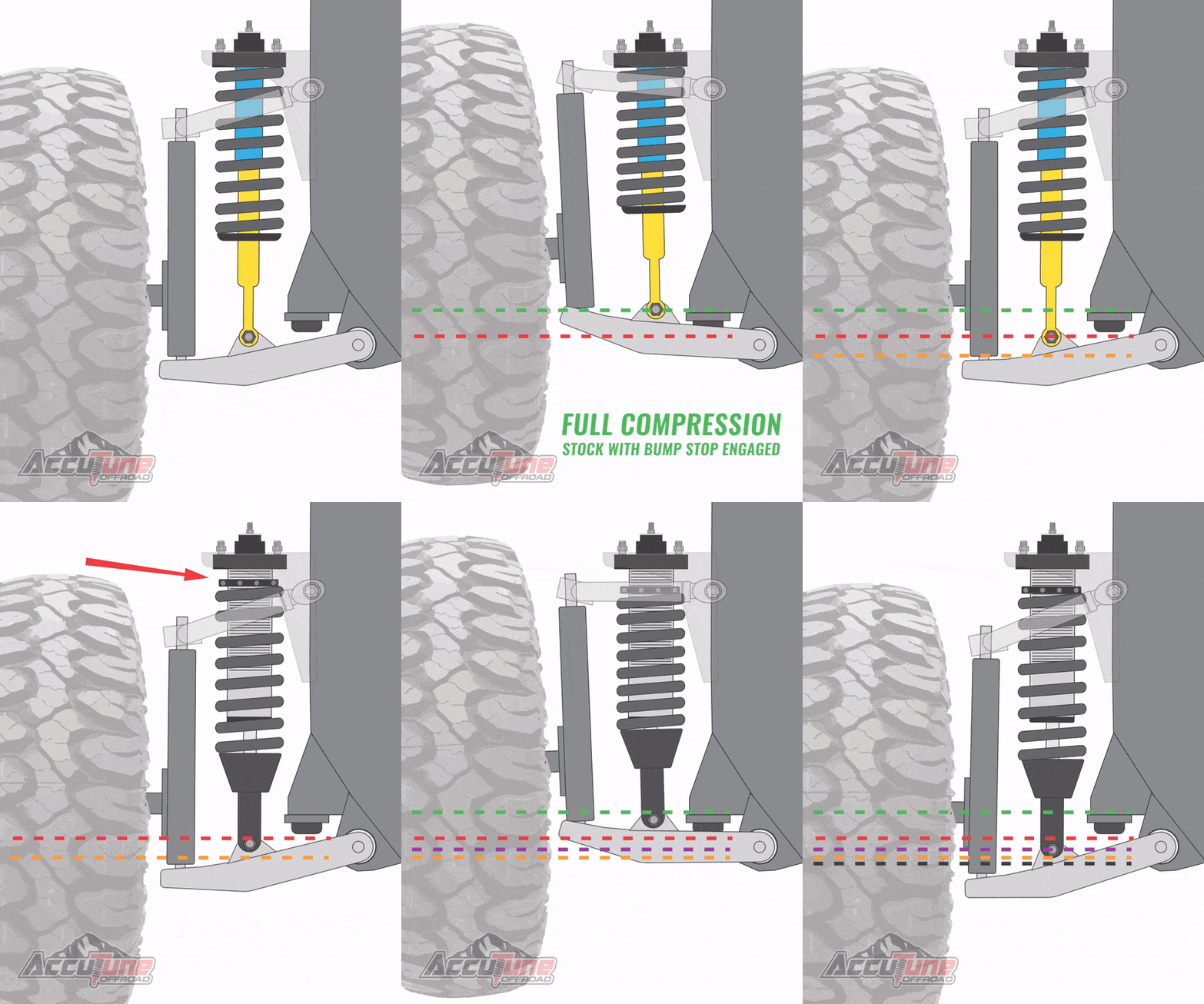
Animation #3 | Adjustable Preload Lift
COILOVER PRELOAD ADJUSTMENT
Aftermarket coilover shocks are a full replacement option for your suspension, offering a wide range of sizes and performance levels. Brands like Fox, King and Ride Shocks produce adjustable coilovers with threaded bodies and preload nuts, allowing for precise ride height adjustments. These shocks are typically installed for both increased lift and improved performance. They are engineered to work with factory suspension geometry, often requiring minimal additional upgrades.
Pros:
-
Relatively simple installation—similar to replacing factory coilovers with basic tools.
-
Adjustable coilovers allow for small side-to-side ride height tweaks to compensate for uneven vehicle weight.
-
Serviceable and tunable, with options to swap springs for heavier loads.
-
Adjustable spring rates and ride height offer a significant performance gain over stock or spacer lifts.
-
Some aftermarket coilovers provide increased shock travel, improving lift and off-road capability.
-
Designed within stock suspension geometry limits; however, longer coilovers may require aftermarket upper control arms for proper alignment and wheel travel.
Cons:
-
Can be expensive—a “buy once, cry once” upgrade.
-
Preload adjustments can be tricky without the right tools.
-
Longer-travel coilovers often necessitate aftermarket upper control arms.